

 Henos Adhana
What buying in Seattle actually costs
What it costs, how the money works, and what happens at every step from the first sum to the keys.
- Before you look
- Finding it
- Winning it
- The keys
Henos Adhana, licensed Washington real estate broker #25016434, eXp Realty
henosadhana.com
Queen Anne over downtown. Joe Mabel, CC BY-SA 4.0
Before you read this
I was born on First Hill and raised in Greenwood, and Seattle has been home for over twenty years. I have helped more than a hundred Seattle renters find somewhere to live, which is a different job from this one, but it taught me the part that matters: most people are not stuck on which house. They are stuck on whether they can afford one, and on not knowing what happens next.
So this is laid out in the order it happens. What it costs, how the money works, who is on your side, the search, the offer, and everything between an accepted offer and the keys. Read it front to back, or turn to the step you are on.
I read the other Seattle buyer guides before writing this one. None of them mention Washington's assistance programmes, so those are in here.
Where a number depends on your income, your credit or your loan, I will point you at the person who can answer it. I am a broker, not a lender, and I would rather say I do not know than guess.

Henos Adhana
Licensed Washington real estate broker #25016434, eXp Realty
Free guide
What buying in Seattle actually costs
What it costs, how the money works, and what happens at every step from the first sum to the keys.
Henos Adhana, licensed Washington real estate broker #25016434, eXp Realty
Figures checked 10 September 2026 against the Washington State Housing Finance Commission, the City of Seattle and the Revised Code of Washington. Programmes change. Confirm before you rely on any of it.
Download the PDF36 pages, including a costs checklist you can tick offMost guides like this open by congratulating you on an exciting journey. This one opens with what it costs, because that is the question everybody arrives with and nobody puts on the first page.
Sixteen steps, in the order they happen. Some you will already be past. Turn to the one you are on.
Contents · 16 steps
- Before you look
- Step 1What it costs
- Step 2Assistance you may qualify for
- Step 3Financing, and the three levels of it
- Step 4Buying when you have a home to sell
- Step 5Who is on your side
- Step 6What to ask a lender
- Finding it
- Step 7Two markets, two playbooks
- Step 8Touring, and how to judge a house
- Step 9Check these on any Seattle house
- Step 10Buying new construction
- Step 11Buying a condo or a townhouse
- Winning it
- Step 12Better terms beat a better price
- Step 13Contingencies, and when to waive them
- Step 14Escalation, worked
- The keys
- Step 15Under contract
- Step 16Closing, and the keys
- Questions I get asked
The numbers, before the paragraphs
Published by the authority named beside it. None of it is a quote for your purchase.
Home Advantage down payment assistance
Washington State Housing Finance Commission
Who qualifies
Washington State Housing Finance Commission
Timing that catches people out
Federal law, and the Commission
What the cash looks like
Henos's own estimates, not published figures

Part one
Before you look
What it costs, how the money works, buying with a home to sell, and who is on your side.
Green Lake. Seattle Municipal Archives, CC BY 2.0
Step 1
What it costs
Everyone knows about the down payment. Four other things come due before closing, and they arrive earlier than most people expect. Here they are in the order you will meet them.
Earnest money goes to escrow within days of mutual acceptance, not at closing. It is applied to your down payment, so it is early rather than extra, but it has to be in your account before you write an offer.
Inspection is paid up front, before you know whether you are buying the house. Book it the day you go mutual; good inspectors are booked out and contingency periods are short.
Closing costs are lender fees, title, escrow, recording and taxes. Washington closes through escrow rather than requiring an attorney at the table, which helps, but it does not make this small.
Prepaids and reserves are the ones nobody mentions: property taxes and insurance collected in advance. Not a fee, your own money moved forward, but it still has to be there.
One document answers all of this for your actual purchase: the Loan Estimate, which a lender must give you within three business days of your application. It is standardised, so two lenders can be compared line by line. Ask for it before you fall in love with a house.
Step 2
Assistance you may qualify for
Washington's main down payment programme surprises almost everyone who looks at it, and all of this is published by the Commission itself.
It is 3%, 4% or 5% of your loan amount, at 0% interest. Home Advantage DPA is a payment-deferred loan: no monthly payments, and the balance comes due when you sell, refinance, move out or pay off the mortgage. It can cover closing costs, not just the down payment.
The income limit is $215,000. Statewide. Most people assume assistance means low income and rule themselves out without checking.
You do not have to be a first-time buyer. The Commission states plainly that first-time homeownership is not required for Home Advantage DPA. The home must be your principal residence.
There is one requirement people discover too late: a free homebuyer education class, sponsored by the Commission, with a certificate. Take it early. It has delayed more closings than it should have.
What I cannot do is tell you whether you qualify. That is a Commission-trained loan officer looking at your actual file. What I can do is stop you deciding you are priced out on your own, because a lot of people do and are wrong.
Where to check this
- Downpayment assistance programmes, WSHFC
- Find a Commission-trained lender, WSHFC
- Down payment assistance in Seattle, City of Seattle, for households at or below 80% of area median income
The income limit is $215,000. Statewide.
Step 3
Financing, and the three levels of it
Buyers use "pre-approved" to mean three different things. Sellers do not, and it is worth knowing which one you are holding.
Level 1, verbal. Someone told you a number. It takes an afternoon and it is worth roughly that. If you find a good house you will not have time to fix your financing before the review date.
Level 2, pre-approval. One to two days. Average strength, and it is what most buyers show up with. It is checked by a computer, not a person, which is why you cannot safely waive the financing addendum on one.
Level 3, fully underwritten. About a week. A real underwriter has verified your income and your assets. This is what makes waiving the financing contingency survivable, and in a competitive North Seattle house it is often the difference.
One more line to know about. For 2026, the conforming limit in King, Pierce and Snohomish is $1,063,750. Everywhere else in Washington it is $832,750. Under that line you are in conventional territory and the rules are the ones you have read about.
Over it you are in a jumbo, and lenders want more. Expect a larger down payment, and expect to hold cash reserves after closing rather than spending your last dollar on the down payment. Reserves can usually sit in a 401(k) or in stock, so this is less brutal than it sounds, but it has to be there and it has to be documented.
Other loan types. A VA loan, for eligible veterans and service members, can mean no down payment and no mortgage insurance. FHA loans are government-backed too, with their own down payment and credit rules. One conversation with a lender tells you which you qualify for.
Where to check this
- 2026 conforming loan limits by county, Federal Housing Finance Agency
A computer checks a pre-approval. A person checks an underwrite.
Step 4
Buying when you have a home to sell
If some of the money for this house is tied up in the one you live in, the order you do things in matters as much as the price of either. There are five ways to do it.
Sell first and ask for a rent-back, so you can stay a few weeks after closing while you buy. Sell, rent, then buy, which means moving twice but buying with cash in hand and no deadline. Buy with an offer that depends on your sale, which keeps you to one move but is a weaker offer. Buy first, then sell, if your income can carry both homes for a while. Or borrow against your current home with a home equity line or a bridge loan, which releases money for the down payment before you sell.
Each trades certainty against convenience, and which one fits depends on your equity, your income and how much uncertainty you can live with. The seller's guide goes through all five in detail. I will walk through them with your numbers, and your lender should be in that conversation too.
Step 5
Who is on your side
Two questions come up here, and I would rather answer both plainly than have you wonder.
Do you need an agent? Sometimes no. Buying from family at an agreed price. A new build on a builder's fixed contract. The house you already rent, from a landlord you know. In those, most of what a buyer's agent does is not the job, and what is left is paperwork you can hire.
It is harder than people expect when the property is competitive, the condition is unclear, or it is your first. Not because the forms are difficult, but because three things are invisible from outside: what a house is worth against very recent nearby sales, what an inspection report means in money, and how strong your offer looks next to the others.
How I get paid. Washington requires a written services agreement between you and my firm, signed before or as soon as reasonably practical after a broker starts working for you, and I ask for it before I show you homes. The law says what it has to contain: how long it lasts, whether it is exclusive, whether you consent to limited dual agency, what I am paid, and whether I will show you homes where nobody has offered to pay my firm. You also get a four-page pamphlet, Real Estate Brokerage in Washington, which every broker has to hand over. That is chapter 18.86 RCW, not a house rule of mine.
Most sellers still offer a credit that covers my fee at closing. The average offered is around 2.5%. When that is what happens, you pay me nothing directly. Northwest MLS did not join the 2024 national settlement, so when a seller offers something, the amount is public and we can see it before you write.
If the seller's credit is lower than my fee, we can usually wrap the difference into the offer, so it comes out of the transaction rather than out of your pocket.
If a listing does not say what the seller will offer, we can simply ask for it in the offer, and the seller weighs it alongside everything else.
If the seller's credit is higher than my fee, the difference comes back to you as a rebate at closing. That is worth knowing, because nobody volunteers it.
My agreement runs a year, covers any property from any source, and you can cancel it at any time for any reason. If you would not sign that, do not sign a worse one with somebody else.
Where to check this
- Chapter 18.86 RCW, real estate brokerage relationships, Washington State Legislature
Step 6
What to ask a lender
Past the rate, which everybody asks about, four questions tell you whether you have the right lender.
Are you Commission-trained, and which Washington programmes do you actually originate? Not every lender does, and the ones who do not will not mention them.
What is my all-in cash to close? Then ask for it in writing, on the Loan Estimate.
Is this a full underwrite or a pre-qualification? A pre-approval letter can mean very little. Full underwriting means income and assets are verified. On a competitive offer that is worth more than a small rate advantage.
What would make this fall apart? A good lender answers plainly.
The lender is part of your offer, not just your rate. A local lender with a name for closing on time can help an offer win. A large bank or credit union often has the best rate but can be slow at weekends, so build in extra time. An online lender can work well on a house that is not competitive. On a house with several offers, the name on your pre-approval letter gets read closely.

Part two
Finding it
Two markets, how to tour, what to check on any Seattle house, buying new, and condos and townhouses.
Phinney Ridge. Joe Mabel, CC BY-SA 4.0
Step 7
Two markets, two playbooks
Whether a house sits for three weeks or goes in four days changes everything about how you should write on it. Most guides describe one process. There are two.
When homes are moving slowly, over about seven days on market. Tour at your pace. Offer at list or below. Earnest money around 3%. Keep your inspection contingency. If the appraisal comes in low, that is the seller's problem to solve, because you have room to renegotiate.
When homes are moving fast, under about seven days. Be fully underwritten before you look. Tour the day it lists. Offer at or above list. Earnest money 5% or more. Waive inspection, but only after a pre-inspection, and expect to cover an appraisal gap yourself.
Most disappointment comes from using the wrong playbook: the slow one in a fast market, or the fast one in a slow one.
Most competitive homes here list Wednesday or Thursday with an offer review date the following Monday or Tuesday. You do not have to wait for the review date. A motivated buyer can write on day one, and sometimes that ends it before the competition arrives.
Step 8
Touring, and how to judge a house
Photographs are chosen to sell the house. A tour is your chance to see what they left out, and to decide quickly, because on a competitive house you may only get one visit.
Outside first. Your first impression from the street, whether the roof looks like it has years left in it, and whether the paint is cracking or the siding is tired. Then the yard: its size, its condition, and what the neighbours can see.
Then the way the house lives. How the rooms connect, where the bedrooms sit in relation to each other, the size of the main bedroom and its bathroom, the closets, and whether there is somewhere to work. The kitchen gets the longest look: cabinets, appliances, light and ventilation.
Then score it before you leave. Out of seven, while it is fresh. Then ask what would make it a six. If the answer is paint, it is a candidate. If the answer is moving it three streets over, it is not.
At the back of this guide there is a sheet for tour notes. Fill a column in at each house, because by the third one they blur together.
Step 9
Check these on any Seattle house
None of these is a reason not to buy. All of them depend on the property, and all of them are cheaper to know about before you write than after. Tick what you have checked.
- Heating oil tankMuch of pre-1970 Seattle was oil heated. Ask whether a tank was decommissioned, and check the state register.
- Knob and tube wiringCommon before about 1950. Some insurers will not write a policy on it, which makes it a financing question rather than an electrical one.
- The side sewerYou own it all the way to the city's main under the street. Look up its side sewer card on the city's map, then have it scoped.
- Form 17The seller's written disclosure. Read it slowly. What is left blank matters as much as what is filled in.
- PermitsFinished basements, converted garages, added bathrooms. Check the permit history against what the listing claims.
- Roof and water heaterAsk the age of both. Each has a lifespan, and each is a fair negotiation if it is near the end of it.
- The lotSlope, and where water goes. Photographs flatten everything. Stand in the yard, in the rain if you can.
- ParkingTownhouses especially: where exactly do you park, and is it yours on paper?
- Unit lot or condoOn a townhouse the legal description says which, and that decides the dues, the insurance, the loan and who fixes the roof.
- The arterialWhich busy road is it near, and what does the house sound like at five in the afternoon?
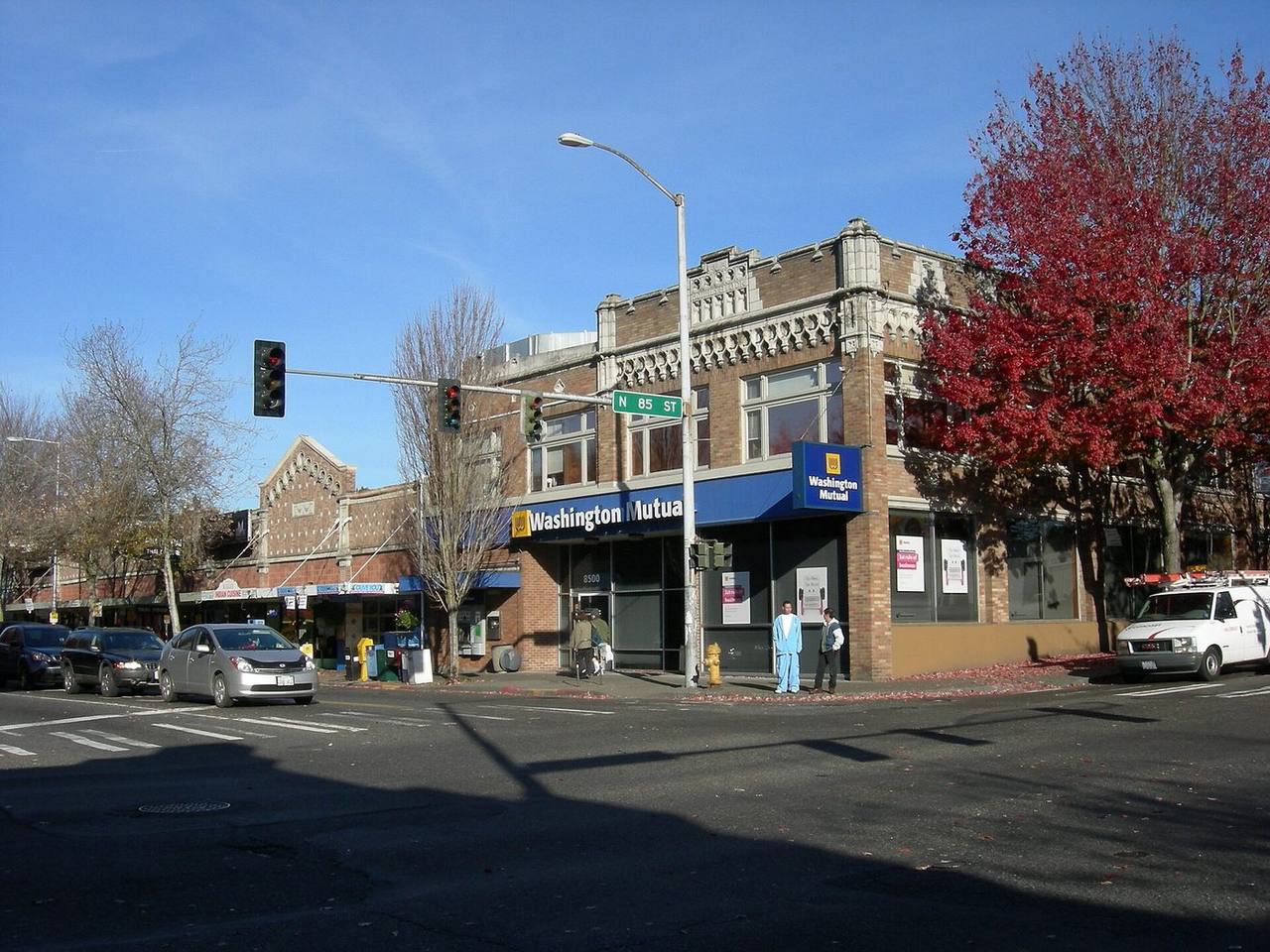
Greenwood. Most of the housing stock north of 85th predates the list on the previous page.
Greenwood. Joe Mabel, CC BY-SA 3.0
Step 10
Buying new construction
A new build runs on the builder's timeline and often on the builder's paperwork, and several things work differently from buying a house somebody has lived in.
If you want your own agent, bring them to the first visit. Many builders will only work with an agent who registered you on that first visit, and will not recognise one who turns up later.
Your earnest money may become non-refundable sooner, and upgrades chosen at the design studio usually need a further deposit you will not get back. Know when each one locks before you sign anything.
Get your own inspection anyway. New does not mean without problems. The final walkthrough is where you mark the small ones for the builder to fix before you take the keys.
Questions worth asking the builder, and worth having answered in writing:
- When will it be finished?And which homes could close now, if your timing is tight.
- Do I have to use your lender?And what incentives come with them. Compare them against a lender of your own.
- What upgrades are there, and what do buyers usually spend?Also which appliances are included, and whether they can be upgraded.
- When are offers reviewed, and do you expect several?And how far over the price recent homes have gone.
- Your contract, or the standard forms?If it is theirs, ask whether you can add an escalation clause and your own inspection.
- How much earnest money, and when does it become non-refundable?Also how long the financing contingency runs.
- What are the HOA dues?And whether that figure is firm or likely to change after closing.
- Have homes here appraised at the contract price?And who covers a low appraisal under their contract.
Step 11
Buying a condo or a townhouse
With a condo you are buying into the association's finances as much as the unit, and in Seattle a townhouse can be either kind of ownership. Houses and condos are separate markets at the moment: condos have been slower, which gives you room to negotiate and makes the documents matter more.
The resale certificate is your disclosure. The association has 10 days to produce it once the seller asks, and you can cancel within five days of first receiving it: five business days under the newer condo law, WUCIOA, and five days or until closing under the older Condominium Act, which still covers many older buildings until 2028.
The lender reviews the building as well as you. For FHA, check HUD's list of approved projects; if the building is not on it, a single-unit approval is sometimes possible. A building outside the mortgage agencies' standards can still be financed, usually with more down.
A townhouse on its own unit lot is owned like a house, but it is not a separate buildable lot, and shared driveways and parking run on recorded easements and maintenance agreements. Read them before you offer.
What to read, and what to look for in it:
- The resale certificateAssessments, special assessments, lawsuits, insurance and rental rules. Your five days start when it arrives.
- The reserve studyUpdated every year, with a professional site visit at least every third year. Compare what it says to save with what the budget saves.
- Special assessmentsAny already approved must be on the certificate. Who pays one that is approved but unpaid is negotiable.
- The meeting minutesThe last year or two. Leaks, disputes and assessments show up here first.
- The master insurance policyWhat it covers, its deductible, and who pays that deductible after a leak.
- Rental rulesMany associations cap or ban rentals. Check before you offer if you might ever rent it out.
- The legal description, on a townhouseA unit in a named condominium, or a lot in a named plat. It decides everything above.

Capitol Hill. Condos and townhouses share most blocks here, and only the paperwork tells them apart.
Capitol Hill. Andrew Kvalheim, CC BY-SA 4.0
Part three
Winning it
Why terms beat price, what each contingency is for, and how escalation works.
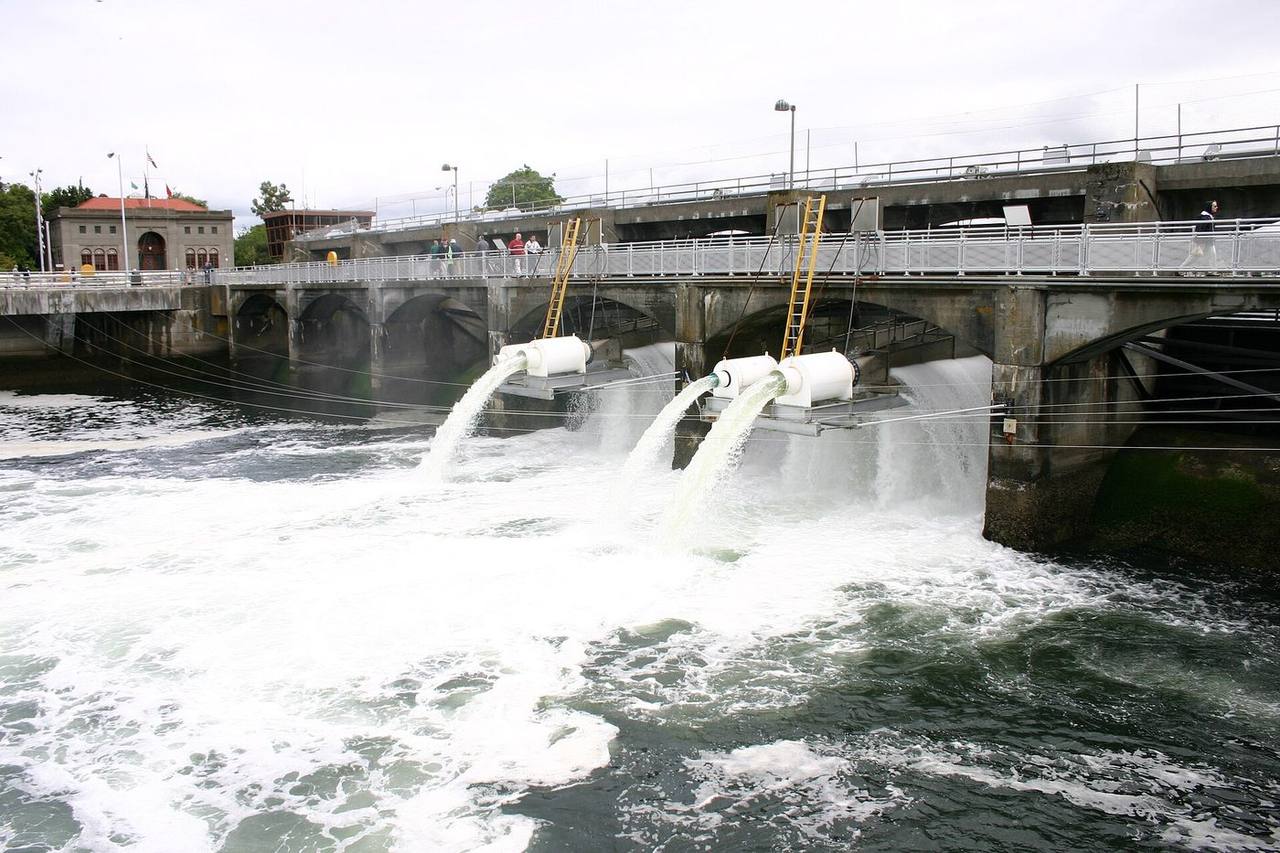
Ballard Locks. Mack Male, CC BY-SA 2.0
Step 12
Better terms beat a better price
Sellers do not simply take the biggest number. They take the offer most likely to close, and price is only one part of that.
I have watched an offer $40,000 over list lose to one $25,000 over. The lower offer won because it also waived the appraisal, released the earnest money, and used a local lender the listing agent could ring on a Sunday. The higher one came with an out-of-state lender. The seller took $15,000 less for certainty.
What makes up offer strength: price, your loan status, closing speed, earnest money, which contingencies you keep, and whether your lender is somebody the other side has heard of. A cover letter and the relationship between the two agents sit on top of that.
Two terms people forget. Offering the seller a rent-back, so they can stay a few weeks after closing, costs you little and can be worth a great deal to someone who has not found their next place. And sometimes the strongest move is to leave escalation out and write one firm, clean number, because it is easy to say yes to.
You do not have to be the richest buyer in the room. Most of that list is free.
The seller took $15,000 less for certainty.
Step 13
Contingencies, and when to waive them
Washington contracts favour buyers by default. Contingencies are the conditions that let you walk away with your earnest money if something goes wrong. Waiving one makes your offer stronger, and it means you carry that risk yourself. Here is what each covers, and how to reduce the risk if you do waive it.
Waiving inspection means buying it as it stands. Reduce the risk by reading the seller's pre-inspection properly, or paying for your own before you write.
Waiving financing means you cannot walk away if your loan falls apart, including for a job loss. Reduce the risk by being fully underwritten first, using a strong local lender, and building extra time into the closing date.
Covering the appraisal gap means that if the house appraises below your offer, you bring the difference in cash. Reduce the risk by holding real reserves and getting a hard valuation from me before you set your number.
What a low appraisal costs, worked. You offer $700,000 with 20% down: $140,000 of your own and a $560,000 loan. It appraises at $690,000. Your lender lends against the appraisal, so 80% is now $552,000, and you bring $148,000 instead of $140,000. That is $8,000 more, not the full $10,000, because you were always paying a fifth of it.
Non-refundable earnest money releases part of your deposit to the seller at a milestone, usually once your inspection is done, and it stays theirs if the deal fails for any reason other than their default. This is the one to be slowest about: use it only once your loan is solid, and only with money you could stand to lose.
None of this means do not waive. It means do the second half of each line above first.
Step 14
Escalation, worked
An escalation clause is the most misunderstood thing in a competitive offer, so here is one with numbers on it. The figures are an example, not a recommendation.
You offer $650,000, the list price. You set an increment of $5,000, meaning you will beat any genuine competing offer by that much. You set a ceiling of $690,000, and you will not go past it whatever happens.
A real competing offer arrives at $668,000. Your offer steps up to $673,000 and stops. You did not pay your ceiling, and you did not have to guess.
Two things people get wrong. The seller has to show you the competing offer, so this is not a blind auction. And your ceiling is the number you will actually pay if somebody pushes you there, so set it at what the house is worth to you rather than at what you could technically scrape together.

Part four
The keys
What happens between an accepted offer and moving in.
South Lake Union. Seattle Municipal Archives, CC BY 2.0
Step 15
Under contract
Mutual acceptance is the day both sides have signed. From here to the keys is usually about thirty days on a financed purchase, and most of it is waiting for other people.
The clock. Every contingency has a deadline, and Washington's standard purchase agreement counts them one way. Day one is the day after mutual acceptance. A period of five days or fewer skips weekends and legal holidays; a longer one counts them. Every deadline ends at 9 p.m., and one that lands on a weekend or a holiday moves to the next business day. Put each one in your calendar the day you go mutual; there is a page for it at the back.
Earnest money goes to escrow within a few days. It sits there until closing, when it becomes part of your down payment. You get it back if you end the deal under a contingency before its deadline. If you walk away without a reason the contract allows, the seller can keep it, and where the contract makes that the seller's only remedy, Washington caps it at 5% of the price.
Two exits the law gives you. Three business days to rescind after you receive the seller's disclosure, Form 17, unless your contract sets a different period. And on a condo, five days to cancel after the resale certificate arrives.
Wire fraud. I will never email you wire instructions. If an email that looks like it comes from me or from escrow asks you to wire money, call escrow on a number you already have and confirm the account details by voice before you send anything. Scammers target exactly this moment, and a wire sent to the wrong account is very hard to get back.
Inspection. Every inspection finds problems; that is what it is for. On an older house, add a sewer scope: in Seattle you own the side sewer all the way to the city's main under the street. The ones that matter are health and safety: roof, foundation, electrical, plumbing, water, mould. If you could see it on the tour, it is already in the price. The seller does not have to fix anything and everything is negotiable, so the conversation is about what is fair rather than what is owed.
If something does need fixing, a credit is usually cleaner than a repair. You choose who does the work and how well, instead of hoping the seller's contractor does it the way you would. Get a bid first, so you know what to ask for.
Appraisal. The lender's valuation, and not an inspection. At or above your price, nothing happens. Below it, what happens next depends on whether you kept the appraisal contingency, which is why the step on contingencies comes before this one.
Financing. If you kept the financing contingency and the loan cannot be obtained by the closing date after a good-faith effort, the agreement ends and your earnest money comes back. That protection is written into the standard form. It only exists if you kept it.
Step 16
Closing, and the keys
Three to five days before closing, the final walkthrough. You are checking that the house is as it was when you agreed, that any negotiated repairs are done, and that nothing that was included has left.
The day before, you sign. Escrow will book you in or send a mobile notary. Bring identification. Your closing funds are wired before this, never on the day.
Closing day. The county records the deed, and the house is yours when it does. In practice keys change hands in the evening, usually between 5:30 and 9pm, because recording happens late in the day.
Utilities. Set them up before you move. On a Seattle townhouse without air conditioning, water, sewer, garbage and electricity together run about $400 to $600 a month. Internet is separate.
Then it is yours. If at any point you would like a second pair of eyes on any of this, the last page is how.
Questions I get asked
Roughly in the order they come up.
Money
Is earnest money on top of the down payment?
No. It is applied to your down payment at closing. It is early, not extra.
What do the utilities run?
On a Seattle townhouse with no air conditioning, budget $400 to $600 a month for water, sewer, garbage and electricity together. That is deliberately the high end. Internet is separate, usually around $50.
Does property tax go up every year?
Assessed values are revised annually and your bill moves with them and with local levies. Budget for it to rise, not to hold.
Can an HOA raise the dues after I buy?
Yes. Read the budget and the reserve study before you waive anything, not the dues figure on the listing. Plenty of Seattle townhouses have no HOA at all, which means shared exterior work is a conversation with your neighbours instead.
Can I use gift money or sell investments for the down payment?
Usually, yes. Tell me and your lender early, because the money has to be documented and it changes the paperwork that goes with your offer.
How much earnest money should I put down?
Around 3% when homes are moving slowly and 5% or more when they are moving fast, the two playbooks earlier in this guide. It is credited to you at closing, so the amount only matters if you walk away without a reason the contract allows.
Your loan
Do I need pre-approval letters at several different prices?
One at the number you are offering is enough. Handing over a letter for far more than you offered tells the seller exactly how much further you can go.
Can I just change the amount on my pre-approval letter?
No. Altering a lender's letter is fraud, and I will not send one. Ask the lender to reissue it. They will do it the same day.
Can I switch lenders after my offer is accepted?
Usually yes, but tell me first. The listing agent will often ring your lender to verify before accepting, so the name on the offer needs to be one that will pick up the phone and vouch for you.
Is an appraisal the same as an inspection?
No, and this trips up nearly everyone. The appraisal is the lender confirming the house is worth what they are lending against. The inspection is for you. Your bank will require the first and does not require the second.
Should I use the lender with the lowest rate?
Not automatically. On a competitive house, a lender who closes on time and answers the phone at weekends can be worth more than a slightly lower rate. On a house with no competition, shop on price.
The offer
Will a bigger earnest money deposit win the house?
Only at the margin. If two offers are otherwise identical, more earnest money is a tiebreak. It will not rescue a weaker offer, and it raises what you stand to lose.
What does an offer review date mean, and do I have to wait for it?
It is the date the seller has said they will look at offers. You do not have to wait. An early offer on day one, before the crowd arrives, sometimes ends it.
If the appraisal comes in low, can I still walk away?
Only if you kept the appraisal contingency. If you waived it, you are bringing the difference in cash. Know which one you signed.
How does an escalation clause work?
You name a starting price, an increment you will beat a rival offer by, and a ceiling you will not pass. If a genuine competing offer appears, yours steps up by the increment until it either wins or hits your ceiling. They have to show you the competing offer.
The house
The seller already paid for an inspection. Should I still get my own?
Read theirs first, properly. If it is thorough and recent, a second one on the same house usually finds the same things and costs you days you may not have. If anything in it is vague, get your own.
Who pays for what the inspection finds?
Nobody has to fix anything. Everything is negotiable and nothing is owed. Asking for a lower price and for every wear item to be repaired is asking for the discount and the renovation at once, and it usually loses you both.
If I can see it on the tour, will we be negotiating on it?
Probably not. If it was visible when you walked through, it is priced in. Inspection negotiations are for what you could not see: roof, foundation, electrical, plumbing, mould.
The listing says a third bedroom. Is it a bedroom?
Check the county record, not the listing. Egress, ceiling height and permits decide it, and a room the assessor does not count is a room that will not count when you sell either.
What does '1% off your rate for the first year' mean?
It is a temporary rate buydown, usually seller-funded, and it usually expires. Ask the lender what the payment becomes in year two, because that is the payment you are actually signing up for.
Can I go to open houses on my own?
Yes, and it is a good way to learn the market. New builds are the exception: many builders need your agent with you on the first visit.
Who owns the sewer line?
You do, all the way to the city's main under the street, including the part past your property line. Look up the side sewer card for the address, and have the line scoped before your inspection period ends.
Is this townhouse a condo?
Check the legal description. A unit in a named condominium means dues, a resale certificate and a lender review of the whole building. A lot in a named plat is owned like a house, with recorded agreements for anything shared.
Waiting
How do I know they have even seen my offer?
I confirm receipt in writing and chase for a decision timeline. Silence over a weekend is almost always a weekend, not a rejection. It is still the worst part of the process and I would rather you rang me than sat with it.
It has been listed 40 days. What is wrong with it?
Often nothing except the first price. Long days on market is the single best negotiating position you can walk into, and the reason is usually visible in the price history rather than in the house.
What if we cannot find anything?
Most people go through phases: looking casually, then actively, then deciding what can flex, whether that is the area, the size or the budget. If none of those can move, stepping back for a while is a legitimate answer.
What you are looking for
Fill this in before your first lender call. It changes what they quote you.
Tour notes
Fill a column in at each house, before you get back in the car. By the third one they blur together.
| Home A | Home B | Home C | |
|---|---|---|---|
| The house | |||
| Address | |||
| Asking price | |||
| Days on market | |||
| Outside | |||
| First impression | |||
| Roof | |||
| Paint and siding | |||
| The yard | |||
| The street, when you visited | |||
| Inside | |||
| Entry and flow | |||
| Floors | |||
| Kitchen | |||
| Bedrooms, and where they are | |||
| Main bathroom | |||
| Closets and storage | |||
| Somewhere to work | |||
| Light | |||
| Deciding | |||
| Score out of 7 | |||
| What would make it a 6? | |||
| Write an offer? | |||
Your contract calendar
Fill it in the day you go mutual. Day one is the day after mutual acceptance; five days or fewer skip weekends and legal holidays; every deadline ends at 9 p.m.
| Due | Done | |
|---|---|---|
| The first week | ||
| Mutual acceptance: the day the signed agreement is delivered | ||
| Earnest money to escrow | ||
| Form 17 received | ||
| Form 17: approve or rescind, 3 business days | ||
| Condo: resale certificate received | ||
| Condo: last day to cancel | ||
| Inspection, appraisal and loan | ||
| Inspection, and a sewer scope | ||
| Inspection response due | ||
| Appraisal | ||
| Financing contingency ends | ||
| Closing | ||
| Final walkthrough | ||
| Signing | ||
| Closing: the deed records | ||
| Keys | ||
Where to check all of this yourself
You do not have to take my word for any of it. Checked 3 September 2026.
Do I qualify for down payment assistance?
Is there help specific to Seattle?
Was the work on this house permitted?
What has this house sold for, and what is it assessed at?
Was there ever a heating oil tank?
Where does the side sewer run, and is it shared?
Is this condo building FHA-approved?
Cash to have ready, in the order it is due
Tick what you have confirmed a number for. The blanks are where budgets break.
- Earnest moneyDays after mutual acceptance, not at closing
- InspectionUp front, before you know if you are buying
- AppraisalIf your lender orders one, often paid up front
- Closing costsLender fees, title, escrow, recording, taxes
- Prepaids and reservesTaxes and insurance collected in advance
- Down paymentThe number you already knew
- Loan Estimate in handThree business days after you apply. Ask for it
- Homebuyer education certificateFree, required for state assistance, book it early
- Upgrade deposits, on a new buildUsually non-refundable once paid. Know when each one locks.
One thing
If you do one thing after reading this
Send me an address. Any address, including one you found ten minutes ago and are not sure about. I will tell you what I think it is worth, what I would worry about, and whether I would write on it.
That takes me about twenty minutes, it costs you nothing, and it is the single most useful thing I do.
If you would rather talk it through, book thirty minutes. Here is exactly what happens on that call: you tell me where you are, I tell you what the next ninety days look like for somebody in your position, and you leave with a number and a plan. I do not pitch. There is no sequence of follow-up emails afterwards. If the answer is that you should wait a year and save, I will tell you that, and I have.
The one thing I would suggest is not waiting until you have found the house. Full underwriting takes about a week, and competitive homes here list on a Wednesday and review offers the following Monday. Starting before you find it is simply easier than starting after.
Three ways to start, easiest first
 Scan to book
And if you are still deciding whether to work with me
You have read twenty-odd pages of me telling you what things cost, which figures I will not repeat because I cannot source them, and when you might not need an agent at all. That is what working together sounds like too. My agreement runs a year, covers any property from any source, and you can cancel it any day you like for any reason at all.
Henos Adhana · (206) 203-4944 · henosadhana@gmail.com
Send me an address.
I will tell you what I see, including when the answer is to keep looking.
Henos Adhana · (206) 203-4944
henosadhana@gmail.com · henosadhana.com
eXp Realty, 1455 Leary Way NW, Suite 400, Seattle 98107
I am a licensed Washington real estate broker, not a lender, an attorney, a tax adviser or a home inspector. Nothing here is legal, tax or lending advice. Programme terms and eligibility are set by the Washington State Housing Finance Commission and your lender, not by me, and they change. Confirm anything you plan to rely on with the relevant authority before acting on it.
Queen Anne over downtown. Joe Mabel, CC BY-SA 4.0
I am a licensed Washington real estate broker, not a lender, an attorney, a tax adviser or a home inspector. Nothing here is legal, tax or lending advice. Programme terms and eligibility are set by the Washington State Housing Finance Commission and your lender, not by me, and they change. Confirm anything you plan to rely on with the relevant authority before acting on it.