

 Henos Adhana
What selling in Seattle leaves you with
What you will net, the excise tax to the dollar, and what happens at every step from the first conversation to the money arriving.
- Deciding
- Getting it ready
- On the market
- To closing
Henos Adhana, licensed Washington real estate broker #25016434, eXp Realty
henosadhana.com
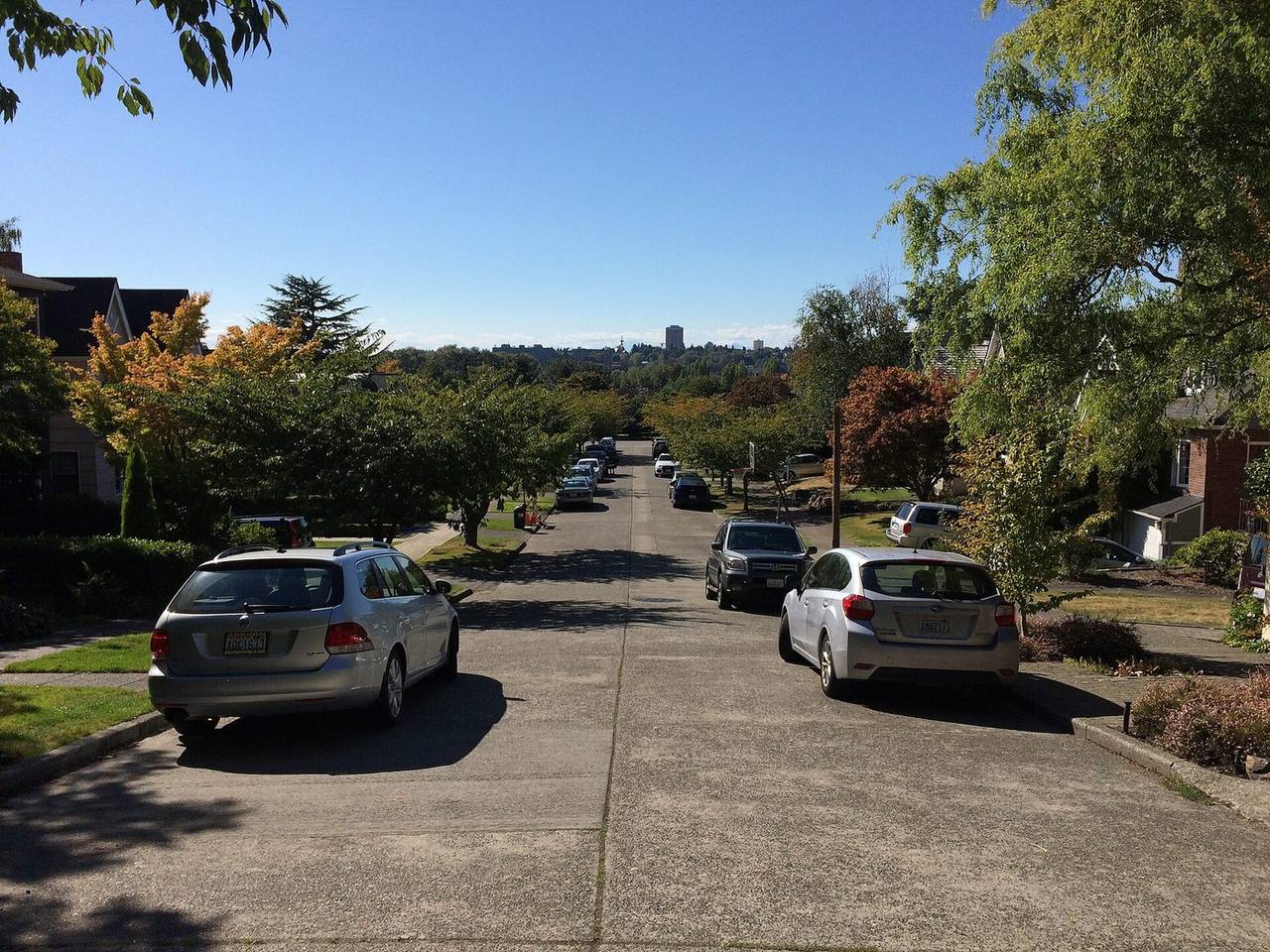
Madrona. Joe Mabel, CC BY-SA 3.0
Before you read this
I was born on First Hill and raised in Greenwood, and Seattle has been home for over twenty years. Most people I talk to about selling are not really asking what their house is worth. They are asking what they will walk away with, and when.
So this is laid out in the order it happens: what you will net, the excise tax, when to sell, getting the house ready, the market, the offers, and everything between an accepted offer and the money arriving. Read it front to back, or turn to the step you are on.
After the mortgage and the commission, the biggest line on a Seattle seller's statement is the excise tax. This guide works it out to the dollar, from the Department of Revenue's own published rates.
Where a number depends on your mortgage or your taxes, I will point you at the person who can answer it. I am a broker, not an accountant, and I would rather say I do not know than guess.

Henos Adhana
Licensed Washington real estate broker #25016434, eXp Realty
Free guide
What selling in Seattle leaves you with
What you will net, the excise tax to the dollar, and what happens at every step from the first conversation to the money arriving.
Henos Adhana, licensed Washington real estate broker #25016434, eXp Realty
Figures checked 10 September 2026 against the Washington State Department of Revenue, the Revised Code of Washington and the IRS. Rates change. Confirm before you rely on any of it.
Download the PDF36 pages, including the seller's checklist you can tick offMost seller's guides open with how to stage a living room. This one opens with what you will walk away with, because that is the question everybody arrives with.
Fifteen steps, in the order they happen. Turn to the one you are on.
Contents · 15 steps
- Deciding
- Step 1What you will walk away with
- Step 2The excise tax, worked
- Step 3When to sell
- Step 4Buying and selling at the same time
- Step 5Who is on your side
- Step 6The cash offer in your inbox
- Getting it ready
- Step 7Your listing timeline
- Step 8The disclosure, Form 17
- Step 9A pre-listing inspection
- Step 10Get it ready
- Step 11Pricing it
- On the market
- Step 12Launch week
- Step 13Reading the offers
- To closing
- Step 14Under contract
- Step 15Closing, and after
- Questions sellers ask
- The seller's checklist
The numbers, before the paragraphs
Published by the authority named beside it, except where marked. None of it is a quote for your sale.
State excise tax, sales closing in 2026
Washington State Department of Revenue
Plus Seattle's own share
Department of Revenue, local rate table, May 2026
Worked for Seattle, 2026 rates
Calculated from the published rates above
Deadlines and exemptions
RCW 64.06, Department of Revenue, IRS
Part one
Deciding
What you will net, the excise tax, when to sell, buying and selling at once, and who is on your side.
Laurelhurst. Sage Ross, CC BY-SA 4.0
Step 1
What you will walk away with
The sale price is the number everyone talks about. What arrives in your account is that price less six things, and it is worth knowing all six before you decide anything else. Here they are, roughly largest first.
Your mortgage payoff. Not the balance on your last statement: the payoff includes interest to the day and any fees, and only your lender can give you the exact figure.
Commission. Your listing broker's fee, and, if you choose to offer it, compensation for the buyer's broker. Both are negotiable and both are written into agreements before anything happens.
The excise tax. A graduated state tax plus Seattle's local share, usually paid by the seller. On most Seattle homes it is the largest line after these two, and the next step works it out.
Title and escrow. In Washington the seller usually pays for the buyer's standard owner's title policy, and escrow fees are usually split. Both are set by the purchase agreement.
Property tax, and any credits. Taxes are prorated to the closing date. Anything you agree to credit the buyer after their inspection comes off here too.
Before you commit to anything, I will put all of this on one page for your actual house at three different prices. That page is called a net sheet, and every seller should see one.
Step 2
The excise tax, worked
Washington's real estate excise tax is charged when property changes hands, and it has two parts.
The state part is graduated. Each rate applies only to the slice of the price inside its band, not to the whole price. For sales in 2026: 1.10% on the first $525,000, 1.28% from there to $1,525,000, 2.75% from there to $3,025,000, and 3% above that.
Seattle adds 0.50% on the whole price. Local rates vary by city and the Department of Revenue republishes them every quarter.
Worked on an $850,000 Seattle sale: $5,775 on the first $525,000, plus $4,160 on the remaining $325,000, is $9,935 to the state. Add $4,250 for Seattle. The total is $14,185, about 1.67% of the price.
Who pays: the Department of Revenue says the seller usually pays it, and if the seller does not, the buyer becomes responsible. In practice escrow takes it out of your proceeds at closing, and you sign an excise tax affidavit as part of the closing paperwork.
For sales from 1 January 2027 the bands move up to $551,000, $1,551,000 and $3,051,000, with the same rates. At a typical Seattle price that changes the tax by tens of dollars, and by a few hundred at the top of the market.
Where to check this
- Real estate excise tax: rates, local rates and when it is due, Washington State Department of Revenue
- Excise tax affidavit and forms, Washington State Department of Revenue
On an $850,000 Seattle sale, the excise tax is $14,185.
Step 3
When to sell
Seattle has more homes for sale this autumn than it has had in years, and that matters more to this question than the time of year does.
Two markets are running side by side. A house priced to what nearby homes have actually sold for still tends to go quickly. A house priced above that tends to sit, and a house that sits usually sells for less than it would have in its first week, because time on the market becomes the buyer's argument.
Houses and condos are not the same market either. Condos have more competition for buyers at the moment, so pricing and presentation count for even more.
The calendar matters less than people think. Spring brings the most buyers and the most competing sellers. Your own timing matters more: where you are going next, when you need to be out, and whether you are buying at the same time.
Selling and buying at once has more ways to do it than most people know about, and the next step goes through each of them.
If you want to know what the market is doing, a headline about Seattle prices tells you very little. The last ninety days of sales on your street tell you a lot, and I will send them to you.
Step 4
Buying and selling at the same time
If you are selling to buy, the order matters as much as either price. There are five ways to do it, and each trades certainty against convenience.
Sell first, and ask for a rent-back. You agree to stay in the house for a few weeks after closing, sometimes longer, while you find the next one. You have your money and you know what it is. The risk is that the buyer says no, so it belongs in the negotiation from the start. Put the length, the rent, any deposit, insurance and the move-out condition in writing. A buyer with an owner-occupant loan has to move in within a set time, so a long rent-back needs their lender's agreement.
Sell, rent, then buy. You move twice, but you buy with cash in hand and no deadline, which is the strongest position a buyer can be in.
Buy first, with an offer that depends on your sale. It keeps you to one move, but a contingent offer is a weaker offer. Many sellers will not consider one on a new listing, and it costs you room to negotiate on price. In Washington it is usually written on NWMLS Form 22B, which lets the seller keep marketing and bump you if a better offer arrives: you then have a short window to remove the contingency or step aside with your earnest money back. It is stronger once your own house is listed and priced to sell, and stronger still once it is under contract.
Buy first, then sell. You can take your time over the next home and sell when you are ready. It only works if your income can carry both homes for a while.
Borrow against this house first. A home equity line or a bridge loan can release money for the next down payment before you sell. They work differently, and a home equity line counts against what you can borrow for the next home, and most lenders will not open one on a house that is already listed, so this is a conversation with a lender before it is one with me.
Which one fits depends on your equity, your income and how much uncertainty you can live with. I will walk through it with your numbers, and I would rather your lender was in that conversation too.
Step 5
Who is on your side
You will sign a listing agreement before your home goes on the market. It sets out what your broker will do, for how long, and what it costs. Read it the way you would read a lease. Washington says what it has to contain: its term, the broker appointed, whether it is exclusive, whether you consent to limited dual agency, and the compensation, including whether you agree to it being shared with a buyer's broker. You should also be handed a short pamphlet, Real Estate Brokerage in Washington.
Commission is negotiable, and always has been. Whether you offer anything to the buyer's broker is a separate decision, and on Northwest MLS it has been since 2019. If you do offer something, the amount is public, and it is written on the first page of the purchase agreement. In my experience the average sellers have offered is around 2.5%, and buyers can also ask for it in their offer.
If you do offer something, there are three ways to do it. A fixed amount, stated when you list. A negotiable one, which tells buyers you are open to it and leaves the conversation until you can see the whole offer. Or nothing, which is legal and can narrow the pool of buyers who are able to write. There is no standard amount in Washington. I will show you the trade-offs of each for your house.
What to ask any agent you are considering: how they would price your house and why, what they would do in the first week on the market, and how they would handle two offers arriving on the same day. The answers tell you more than a list of past sales.
Washington requires the brokerage relationship to be in writing, and chapter 18.86 RCW sets out what a broker owes you.
Where to check this
- Chapter 18.86 RCW, real estate brokerage relationships, Washington State Legislature
Step 6
The cash offer in your inbox
If you own a house in Seattle you have probably had one: a letter, a text or an ad promising a cash offer, no repairs and no showings. They are real offers, and for some sellers they are the right answer.
Compare the net, not the headline. Once its fees are taken off, a cash offer usually nets less than a well-priced listing, and it may be reduced again for repairs after the buyer's own inspection. The excise tax is due either way. Put what you would walk away with from each on one page.
When it is the right answer: you need to be out in weeks, the house needs work you cannot or do not want to do, or showings are not practical. Certainty is worth money, and paying for it is a reasonable choice.
When it usually is not: a house in reasonable condition, priced to the market, in a neighbourhood where that still sells. Ask the cash buyer for their fee and any repair deductions in writing. You should decide with both numbers in front of you.

Part two
Getting it ready
How long it takes, the disclosure, the inspection question, the prep list and the price.
Loyal Heights. Joe Mabel, CC BY-SA 3.0
Step 7
Your listing timeline
How long it takes to get a house on the market depends almost entirely on what the pre-inspection finds. Roughly: two weeks if it only needs the yard, a pressure wash and the usual listing prep. Four to five weeks for handyman work inside and out. About eight weeks when several trades are involved, such as the roof, the crawl space, a plumber and an electrician. Four to six months for a remodel.
Most sellers are surprised by what the inspection turns up, and most do not leave enough time for it. Getting bids alone can take a couple of weeks, and the good contractors are booked out. Plan for the longer version. If the report comes back clean, you simply list sooner.
Here is the longer version, counted back from the day the house goes live. Tick each one off as it happens.
- Eight weeks outPre-inspection and sewer scope, early enough to act on what they find.
- Seven weeks outBids for anything that needs doing. Allow for slow replies.
- Five weeks outWork begins, with slack built in for delays.
- Two weeks outPressure washing, a yard tune-up, and the furnace and fireplace serviced.
- The week beforeStaging if you are using it, a professional clean, then photographs.
- List dayUsually a Wednesday. Online everywhere at once, with open houses that first weekend.
- Two weeks inIf the showings and the feedback say so, the first conversation about price.
- About thirty days after an accepted offerClosing, on a financed sale.
Step 8
The disclosure, Form 17
Washington requires sellers of residential property to give the buyer a written disclosure of what they know about the house. The form most sellers use is called Form 17, and the rules behind it are in chapter 64.06 RCW.
When it is due. Unless the buyer has waived it, you deliver it within five business days of mutual acceptance, or whatever timeframe the agreement sets.
Who is exempt. A sale by an estate's personal representative, a bankruptcy trustee, a foreclosure, a transfer to family or in a divorce, and a few others. A living trust, a power of attorney or a guardianship is not exempt, so most sellers fill it in. New construction that has never been occupied skips the structural and systems sections.
What the buyer can do with it. They then have three business days to accept it or rescind the agreement. If you later learn something new from anyone other than the buyer's side, or something changes that makes an answer inaccurate, you amend it and the buyer gets three business days to accept or rescind again. The exception is when you put the problem right at least three business days before closing.
How to fill it in. Answer what you know, leave nothing blank, and write NA only where a question clearly does not apply. "Don't know" is an honest answer; a guess is not. Old oil tanks, knob and tube wiring and unpermitted work are all questions on the form, and none of them is a reason a house cannot sell.
What it protects you from. It is a disclosure, not a warranty, and you are not liable for an error you had no actual knowledge of. The other side of that: once you know something, including from your own inspection, it goes on the form.
It is much easier to complete before you list than in the week after an offer arrives.
Where to check this
- Chapter 64.06 RCW, real property transfer disclosures, Washington State Legislature
Step 9
A pre-listing inspection
On a popular Seattle home, many buyers want to waive their inspection so their offer is stronger. They will only do that if they can see the house's condition some other way, and an inspection you paid for is how.
The case for one. Offers tend to arrive with fewer conditions attached, and there are no surprises in week two of the contract. A home inspection usually runs $600 to $1,500.
The case against. What you learn, you disclose. If the report finds something, it goes in front of every buyer.
The other risk is the report itself. If the inspector you hired gets something wrong, it can come back to you, and handing over a report can look as if you are steering buyers away from their own inspection. They can still get one. You will make this choice in writing before we list, and I will tell you which way I would go for your house.
On an older Seattle house, add a sewer scope. You own the side sewer all the way to the city's main under the street, one Seattle inspector lists a standard scope at $300, and the city's side sewer card for your address shows where the pipe runs and whether it is shared with a neighbour.
What you learn, you disclose.
Step 10
Get it ready
Nothing on this list is renovation. It is the work that shows up in the photographs, which are the first showing your house gets. Tick what is done.
- Declutter every roomTake out about a third of what is on display. Buyers need to picture their things, not yours.
- Clean everything, windows includedInside and out. It is the cheapest thing on this list and buyers notice it most.
- Small repairsDrips, cracked caulk, sticking doors, loose handles, dead bulbs.
- Paint where it is scuffedAnd neutral where a colour is strong. Leave the rest alone.
- Match the light bulbsOne colour temperature through the house. Photographs exaggerate the difference.
- Half-empty the closetsBuyers open them, and a full one reads as not enough storage.
- The yard and the entryMow, edge, clear the path, sweep the porch. Fresh house numbers are cheap.
- Neutralise smellsPets and cooking. You stop noticing them; buyers do not.
- Put away the private thingsValuables, prescriptions, paperwork and family photographs, before any showing.

Interbay. Buyers see the photographs before they see the house.
Interbay. Joe Mabel, CC BY-SA 3.0
Step 11
Pricing it
Price is set by what similar homes nearby have recently sold for, adjusted for the differences. I will show you the comparable sales and my reasoning, not just a number.
There are three ways to set it. At market value, which usually draws the most offers for the least disruption to your life. Below it, to start a bidding war, which can work and can also leave money on the table. At a stretch, reducing if it does not sell, which invites buyers to ask what is wrong with it and risks chasing the market down.
The list price is also a marketing decision. Priced to attract several buyers by the review date, a home can end up above its list price. Priced at the top of what it might fetch, it can sit, and time on the market becomes the buyer's negotiating position rather than yours.
A price reduction brings attention back, but it also tells every buyer that the first number was too high. Getting the first number right is worth more than any reduction.
The showings tell you whether the price is right. Priced to the market, a house usually has its offer within the first couple of weeks. When showings are thin, the price is the first thing to look at, and how thin tells you roughly how far off it is.

Part three
On the market
The first week, and how to read the offers when they come.
Fremont. Cumulus Clouds, CC BY-SA 3.0
Step 12
Launch week
Your photographs go out, the listing goes live, and the first two weeks decide more than any that follow. Buyers who have been watching the market see a new listing first, and judge it against everything else they have seen.
When homes around you are selling quickly, many list on a Wednesday or Thursday and set an offer review date for the following Monday or Tuesday, which gives buyers a weekend of tours. Buyers can still offer early to try to end it, and you can decide whether to consider an early offer.
When they are not, a review date can work against you, because it tells buyers to wait. In a slower market most listings take offers as they come, and the first two weeks are about getting as many of the right buyers through the door as possible.
Showings. Be out of the house. With fewer buyers per listing, every visit counts for more, and buyers say what they really think when the owner is not in the room.
If the first two weeks are quiet, the market is telling you something about the price, the photographs, the condition, or how easy the house is to see. I will tell you which, from the feedback, before we change anything.

Wallingford. The first two weekends on the market decide more than any that follow.
Wallingford. Rick Gleason, CC BY-SA 4.0
Step 13
Reading the offers
The best offer is not always the highest one. It is the one most likely to close, on the terms you need.
The buyer's financing. A verbal approval is worth little, a pre-approval is average, and a fully underwritten buyer has had their income and assets checked by a person. A local lender the listing side can reach on a Sunday is worth something too.
Earnest money, contingencies and dates. Larger earnest money and fewer contingencies mean a buyer who is less likely to walk away. The closing date and when you move out matter as much as either.
Escalation clauses. A buyer may offer a price that rises by a set amount above any genuine competing offer, up to a ceiling. If their clause is triggered, you have to show them the competing offer.
What I tell other agents is up to you, in writing. You can leave it to my judgement, let me say how many offers you have and nothing more, or have me say nothing at all. Sharing can draw a stronger offer out of a buyer. It can also put off one who thinks they cannot reach the number they would have to beat.
I have seen an offer $25,000 over list beat one $40,000 over, because it waived the appraisal and came with a lender that would answer the phone. Price is one line of the offer, not the whole of it.
The best offer is the one most likely to close.

Part four
To closing
What happens between an accepted offer and the money arriving.
Sunset Hill. Johnmfeit, CC BY-SA 4.0
Step 14
Under contract
Mutual acceptance is the day both sides have signed. From there, a financed sale usually closes in about thirty days, and every contingency runs on its own clock. Day one is the day after mutual acceptance; periods of five days or fewer skip weekends and legal holidays, and every deadline ends at 9 p.m.
The buyer's inspection. If they kept an inspection contingency, they may ask for repairs or a credit. You do not have to agree to anything. What they could see on the tour is already in the price; the conversation is about things nobody could see. A credit is usually simpler than doing repairs yourself.
The appraisal. The buyer's lender values the house. At or above the price, nothing happens. Below it, what happens next depends on whether the buyer kept an appraisal contingency or agreed to cover the gap.
The buyer's loan. If they kept the financing contingency and cannot get the loan by closing after a good-faith effort, the agreement ends and their earnest money goes back to them.
Form 17 and the buyer's three days. You deliver the disclosure within five business days, and the buyer then has three business days to accept it or rescind. Most listings make it available before offers arrive, so buyers read it before they write.
If the buyer walks away. If they end the deal under a contingency before its deadline, their earnest money goes back to them. If they walk away without a reason the contract allows, you may keep it, and where the contract makes that your only remedy, Washington caps it at 5% of the price.
Step 15
Closing, and after
A few days before closing, you sign. Escrow will book you in or send a mobile notary. Bring identification. The excise tax affidavit is part of this paperwork.
Closing day. The deed is recorded, and escrow pays off your mortgage and the excise tax, then sends you the rest. The house changes hands when the deed records, usually late in the day.
Moving out. Possession is whatever the agreement says: usually closing day, sometimes later by agreement. Leave the keys, the garage openers and the manuals. Cancel utilities and insurance only after recording, not before.
Taxes afterwards. Washington's capital gains tax does not apply to real estate. Federally, you may be able to exclude up to $250,000 of gain on your main home, or $500,000 filing jointly. Ask an accountant how that applies to you.
Where to check this
- Capital gains tax: real estate exemption, Washington State Department of Revenue
- Topic 701, sale of your home, IRS
Questions sellers ask
Roughly in the order they come up.
Money
Who pays the excise tax?
Usually the seller. The Department of Revenue says that if the seller does not pay it, the buyer becomes responsible. Escrow takes it out of your proceeds at closing.
Do I owe Washington capital gains tax on my house?
No. The Department of Revenue lists real estate as exempt. Federal tax is separate, and the home sale exclusion covers most people's main home. Ask an accountant.
Do I have to pay the buyer's agent?
Not automatically any more. It is negotiable and it is your decision. Offering something widens the pool of buyers, and a buyer can also ask for it in their offer.
Is my payoff the same as my loan balance?
No. The payoff includes interest to the day and any fees. Ask your lender for a payoff statement.
Should I take a cash offer?
Compare what you would walk away with from each, not the headline figures. The cash offer buys speed and certainty; a well-priced listing usually nets more. Send it to me and I will put the two side by side.
Timing
Is now a good time to sell in Seattle?
For a house priced to what nearby homes have sold for, it can be. Priced above that, it will probably sit. Condos face more competition than houses at the moment. Your street tells you more than any city headline.
When is the best time to sell in Seattle?
Spring usually has the most buyers and the most competition. Your own timing, and your street, matter more than the month.
Should I sell first or buy first?
There are five ways to do it, from selling with a rent-back to borrowing against your equity first. Each trades certainty against convenience, and the step on buying and selling at the same time goes through all of them.
How long from listing to money in the bank?
A competitive home can be under contract in the first week. A financed sale usually closes about thirty days after that.
How long does it take to get a house ready to list?
From two weeks to a few months, depending mostly on what the pre-inspection finds. Plan for the longer version and list sooner if you can.
The house
Do I have to fix what the buyer's inspection finds?
No. Everything is negotiable and nothing is owed. What was visible on the tour is priced in.
Do I have to disclose an old oil tank or old wiring?
Form 17 asks about both. Answer what you know. Neither stops a house selling, and both are easier handled upfront.
Should I stage?
Empty rooms photograph smaller than furnished ones. Staging the main rooms is usually enough.
Should I be home for showings?
No. Buyers talk more freely when you are out, and that feedback is useful.
Who owns the sewer line?
You do, all the way to the city's main under the street. A scope before you list tells you what a buyer's inspector will find, while you still control the fix.
I am selling for an estate or a trust. Do I need Form 17?
An estate sold by its personal representative is exempt. A living trust, a power of attorney or a guardianship is not, so most of those sales still need one.
Offers
Should I take the highest offer?
Take the one most likely to close on the terms you need. Often that is the highest; not always.
Do I have to wait for the review date?
No. You can accept an early offer. Whether you should depends on the offer and how the first days have gone.
What if the appraisal comes in low?
That depends on the buyer's contract: whether they kept an appraisal contingency or agreed to cover a gap.
If the buyer backs out, do I keep the earnest money?
If they cancel under a contingency before its deadline, it goes back to them. If they walk away without a reason the contract allows, you may keep it; where the contract makes that your only remedy, Washington caps it at 5% of the price.
What you need from this sale
Fill this in before we first talk. It changes how the sale should run.
Your net sheet, at three prices
These are the lines. I fill in the numbers for your house, and every seller should see this page before agreeing a price.
| Target | Likely | If it sits | |
|---|---|---|---|
| What it sells for | |||
| Sale price | |||
| Comes off at closing | |||
| Mortgage payoff, from your lender's payoff statement | |||
| Your listing broker's compensation | |||
| Buyer's broker compensation, if you offer it | |||
| Excise tax: state graduated rate plus Seattle's 0.50% | |||
| Owner's title policy for the buyer | |||
| Escrow fee, your share | |||
| Recording fees | |||
| Property tax, prorated to closing | |||
| Credits to the buyer after their inspection | |||
| Home warranty, if you offer one | |||
| Before you list | |||
| Pre-inspection and sewer scope | |||
| Repairs | |||
| Cleaning | |||
| Yard and pressure washing | |||
| Furnace, fireplace and AC service | |||
| Staging, if you use it | |||
| What you walk away with | |||
| Estimated net | |||
Compare the offers
Mark the strongest in each row. The best offer is the one most likely to close on the terms you need, and it is not always the highest.
| Offer A | Offer B | Offer C | |
|---|---|---|---|
| Price | |||
| Offer price | |||
| Escalation: rises to | |||
| Credits asked for | |||
| Net price | |||
| Money and timing | |||
| Earnest money | |||
| Closing date | |||
| Rent-back | |||
| Financing | |||
| Cash, conventional, jumbo, FHA or VA | |||
| Down payment | |||
| Lender | |||
| Pre-approved or fully underwritten | |||
| Conditions | |||
| Inspection | |||
| Financing contingency | |||
| Appraisal | |||
| Disclosure (Form 17) | |||
| Offer expires | |||
The first weeks on the market
Fill in a column each week. Showings and feedback tell you whether the price is right, and if they say it is not, the first conversation about price comes at two weeks.
| Week 1 | Week 2 | Week 3 | |
|---|---|---|---|
| Traffic | |||
| Showings | |||
| Open house visitors | |||
| Second showings | |||
| What buyers said | |||
| Price | |||
| Condition | |||
| Photographs | |||
| Location and layout | |||
| Where it stands | |||
| Offers in hand | |||
| Change anything? | |||
Your sale calendar
Fill it in the day you go mutual. Day one is the day after mutual acceptance; five days or fewer skip weekends and legal holidays; every deadline ends at 9 p.m.
| Due | Done | |
|---|---|---|
| The first week | ||
| Mutual acceptance: the day the signed agreement is delivered | ||
| Buyer's earnest money to escrow | ||
| Form 17 delivered, within 5 business days | ||
| Buyer's Form 17 decision, 3 business days | ||
| Condo: resale certificate delivered | ||
| The buyer's contingencies | ||
| Inspection period ends | ||
| Your answer to any repair request | ||
| Appraisal | ||
| Financing contingency ends | ||
| Closing | ||
| Signing | ||
| Closing: the deed records | ||
| Keys, openers and manuals handed over | ||
| Utilities and insurance cancelled | ||
Where to check all of this yourself
You do not have to take my word for any of it. Checked 10 September 2026.
How is the excise tax calculated, and what is my city's rate?
What does the disclosure law require?
Will I owe tax on the gain?
What does the county have on file for my house?
Were permits pulled for work I had done?
Is there a record of an oil tank?
Where does my side sewer run, and is it shared?
The seller's checklist
In the order it comes up. Tick as you go.
- Payoff statement requestedBefore you list. From your lender, not your last statement.
- Form 17 filled inAnswer what you know. 'Don't know' is allowed.
- Permits found for past workSeattle's records are online. Look before a buyer does.
- HOA documents orderedIf you have an HOA. A condo's resale certificate can take ten days, and the association can charge up to $275 for it.
- Records gatheredOil tank, sewer scope, warranties, manuals, recent bills.
- Side sewer card looked upOn the city's map, with a scope if the house is older.
- Pre-listing inspection decidedYes or no, and why.
- Buyer's broker compensation decidedFixed, negotiable or nothing. Your call.
- What I can say about your offersDecided in writing, before the first offer arrives.
- House ready for photographsThe prep list in step 10.
- Net sheet seen at three pricesBefore you agree a list price.
- Showing planPets, valuables and prescriptions away. You out.
- Every contingency deadline in your calendarThe day you go mutual. Short deadlines skip weekends and holidays; every one ends at 9 p.m.
- Utilities and insuranceCancelled after the deed records, not before.
- Keys, openers, manualsLeft for the new owner.
One thing
If you do one thing after reading this
Ask me for a net sheet. Tell me the address and roughly what you owe, and I will send back what you would walk away with at three different prices, with the excise tax, the payoff and every other line worked out.
It takes me about a day, it costs you nothing, and it is the most useful page to have in front of you before you decide anything else.
If you would rather talk it through, book thirty minutes. You tell me what you need from the sale and when; I tell you what the next sixty days would look like and what I would do first. I do not pitch, and there is no sequence of follow-up emails afterwards. If the answer is to wait a season, I will say so.
The one thing worth starting early is the paperwork: the disclosure, your permits, your payoff. None of it is hard, but all of it takes longer to gather than people expect, and it is much easier before buyers are waiting on it.
Three ways to start, easiest first
 Scan to book
And if you are still deciding who to list with
Before you sign anything with anyone, ask them to walk you through every line of your net sheet and the listing agreement. I will, and I would rather you understood both than signed quickly.
Henos Adhana · (206) 203-4944 · henosadhana@gmail.com
Send me an address.
I will send back what you would walk away with at three different prices.
Henos Adhana · (206) 203-4944
henosadhana@gmail.com · henosadhana.com
eXp Realty, 1455 Leary Way NW, Suite 400, Seattle 98107
I am a licensed Washington real estate broker, not an attorney, an accountant or a tax adviser. Nothing here is legal, tax or financial advice. Excise tax rates are set by the Washington State Department of Revenue and change; the figures here were checked on the date shown. Confirm anything you plan to rely on with the relevant authority or your own adviser before acting on it.
Madrona. Joe Mabel, CC BY-SA 3.0
I am a licensed Washington real estate broker, not an attorney, an accountant or a tax adviser. Nothing here is legal, tax or financial advice. Excise tax rates are set by the Washington State Department of Revenue and change; the figures here were checked on the date shown. Confirm anything you plan to rely on with the relevant authority or your own adviser before acting on it.