
 Henos Adhana
Buying an adult family home in Washington
From first call to first resident, in plain steps. Who does what, and where I come in.
- Before you look
- Finding it
- Winning it
- The keys
Henos Adhana, licensed Washington real estate broker #25016434, eXp Realty
henosadhana.com
My parents' home
Before you read this
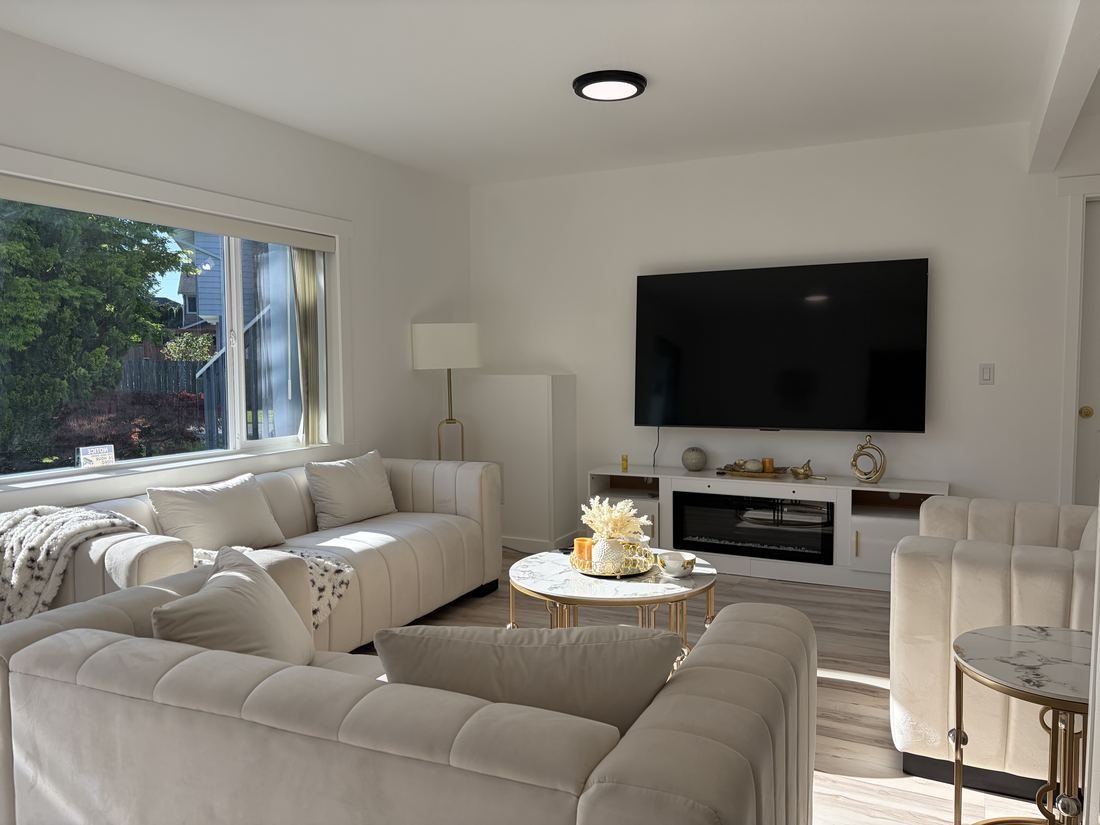
My family runs a licensed adult family home north of Seattle. My parents turned an ordinary house into a licensed home themselves. I watched the house side of it, from breaking ground to the first resident.
It took two years from the day work began to the day we had a license. A resident moved in within a month of opening. And many things that mattered were decided on the day we chose the house.
This guide gives you the whole road in short steps. It does not try to teach you everything. Some steps belong to other professionals: your attorney, your lender, your licensing consultant. I tell you which, so you ask the right person.
My part is the house, and I can help with the business inside it, too. I find homes, check them against the state's rules, tour them with you, write the offer and walk you to closing. I will tell you when the answer is no.

Henos Adhana
Licensed Washington real estate broker #25016434, eXp Realty
Free guide
Buying an adult family home in Washington
From first call to first resident, in plain steps. Who does what, and where I come in.
Henos Adhana, licensed Washington real estate broker #25016434, eXp Realty
Checked October 13, 2026 against DSHS, Washington law and the Department of Revenue. The inspection, extra-payment, specialty training and TB rules were added and checked on October 16, 2026. Fees and rules change, so confirm before you rely on any of it. Every source is linked on the web version of this guide, at henosadhana.com/guides/buying-an-adult-family-home/.
There are 6,212 licensed adult family homes in Washington, and no simple way to search for one. The MLS has no category for them. They turn up in a listing's remarks, through a business broker, or by word of mouth.
This guide walks through the steps in the order they happen. Some steps are mine. Some belong to your attorney, your lender or the state. Each step says who. The detail is folded under each one for the day you want it.
Contents · 15 steps
- Where you are
- Step 1Start with where you are
- Step 2Three ways in
- Step 3Can you be licensed?
- Your money
- Step 4What a home earns, and what it costs
- Step 5How the money works
- Step 6Three levels of financing
- Step 7Build your team
- Your house
- Step 8Finding the house
- Step 9What the house must have
- Winning it
- Step 10Buying an operating home
- Step 11Making the offer
- Step 12From accepted offer to first resident
- Working together
- Step 13Why work with me
- Step 14The agreement, in plain English
- Step 15What happens next
Part one
Where you are
Five questions, the three ways in, and whether you can be licensed.
My parents turned an ordinary house into a licensed home. It took two years from breaking ground to the license, and I watched the house side of it. Almost everything that mattered was decided on the day the house was chosen.
My parents' home
Part one
Where you are
Five questions, the three ways in, and whether you can be licensed.
My parents turned an ordinary house into a licensed home. It took two years from breaking ground to the license, and I watched the house side of it. Almost everything that mattered was decided on the day the house was chosen.
Step 1
Start with where you are
Before you read about houses, answer five questions. I ask every buyer the same ones, and your answers decide which steps matter most to you.
If you do not know an answer yet, that is fine. Write down what you do know. The rest of this guide helps you fill in the gaps, and we come back to your answers when we talk.
Step 2
Three ways in
We choose the route together. There are three ways into an adult family home. Which one you choose changes the order of everything after it.
An operating home. You buy the house and the business inside it. It costs more at the start, and it earns from day one. The license does not come with it. You apply for your own, and you need it before you can take over.
A house to convert. It costs less to buy and takes longer to open. You turn an ordinary house into a licensed home, and the mortgage runs the whole time. For my family it took two years from breaking ground to a license. A resident moved in within a month of opening.
Rent the house, buy the business. The owner keeps the house. You lease it, and you buy the licensed business through a change of ownership. You buy no real estate. You still apply for your own license for that address, and DSHS still needs the seller's 60 days' notice, so it is faster than building a home, but it is not instant. One listing I saw offered the main level for $4,500 a month on a five-year lease, with the business for $10,000. Treat that as the shape of a deal, not a price.
What to check in the lease. The license belongs to that address, so the lease is the roof over the business. Ask your attorney to read it, and bring these questions. How long is it, and can you renew? Who pays for repairs, and for changes the state requires? What happens to the business if the owner sells the house? Can you buy the house later?
Where I fit. I can help with the house you buy, and with a later purchase if you want one. I can also help you find and buy the business inside an operating home, working beside your attorney. For a lease, I can walk you through the questions above, and your attorney reads the lease before you sign. If you are an investor buying a house to lease to an operator, tell me. I can help you choose a house that an operator can get licensed.
Here is the whole route on one page. The tags show who handles each stage.
Where this comes from
A change of ownership needs a new license application. The license does not transfer to the buyer.
Where to check this
- RCW 70.128, adult family homes, Washington State Legislature
- WAC 388-76-10105, change of ownership, Washington State Legislature
- WAC 388-76-10010, the license, Washington State Legislature
An operating home needs more money on day one and starts earning on day one.
Step 3
Can you be licensed?
This step belongs to you, and then to DSHS. It is the gate, so start here. A home for sale is only worth buying if the state will license you to run it. A converted house with no license is just a house. So check this before you look at houses.
The state asks for five things. Here they are.
DSHS decides who gets a license. A licensing consultant can guide you through it, and I can help you plan the order of things. I will tell you early if something will not fit your timeline.
If you already have a license, a second home is a new application and a new license, and the state sets waiting periods first. Ask DSHS or your consultant before you write an offer.
Specialty training, if the home serves those residents. A home that takes residents with dementia, a mental health need or a developmental disability needs extra classes. The provider, the entity representative, the resident manager and the caregivers take them. They are separate from the 54-hour class. On an operating home, ask which of these the current residents need, because your training has to cover them. Your consultant will tell you which classes fit.
When this step is done you hold
- Your 1,000 hours, on the notarized DSHS formWithin the last 60 months
- Your class and training certificatesThe administrator class, and Home Care Aide or your proof of exemption
- Your CPR, first aid and food worker cardsCPR and first aid taken in person
- Your credit in orderNo unpaid debt other than medical
The rules, with sources
Where to check this
- Information for prospective providers, DSHS
- RCW 70.128.120, qualifications of providers, Washington State Legislature
- WAC 388-112A-0050, training before licensure, Washington State Legislature
- DSHS caregiving experience form 10-417, DSHS
- WAC 388-112A-0400, specialty training, Washington State Legislature

Part two
Your money
What a home earns, how the money works, how financing is read, and who is on your team.
The cost of a home is mostly people, because someone must be awake and responsible around the clock. Understand the money before you fall for a house.
Bothell. Joe Mabel, CC BY-SA 4.0
Part two
Your money
What a home earns, how the money works, how financing is read, and who is on your team.
The cost of a home is mostly people, because someone must be awake and responsible around the clock. Understand the money before you fall for a house.
Step 4
What a home earns, and what it costs
Your accountant has the last word on these numbers, and I can help you gather them. Most answers online tell you what a resident pays. That is revenue. What you keep is the real business, so look at both halves.
The private pay range is what I see around Seattle, and the state does not publish one. Medicaid rates are published by DSHS and set by the care level each resident is given.
The cost side is mostly people, because someone must be awake and responsible around the clock. Then add the mortgage, insurance, food, supplies, the $450 per bed yearly license fee, and the months before the home is full.
Extra payments from Medicaid residents. The state's daily rate pays for the room, meals, personal care and everything in the care plan. You may not ask a Medicaid resident or their family to pay extra for any of it. The state calls an extra payment supplementation. It is allowed only for things the rate does not cover, and only under a written policy that you give every applicant and resident before you ask. If every bedroom in the home is private, you cannot charge more for a private bedroom. A feature that only some rooms have, such as a private bathroom, can carry a charge. Record who paid, what for and how much, and tell the resident's case manager. Your attorney or consultant can write the policy, and I can help you find one. Only take payments that are in it.
My site has a calculator that does the arithmetic on your own numbers: could you run one here.
Where the Medicaid rates come from
The state's rate is paid per resident, per day. It is set by one of seventeen care classifications, and it is reduced by what the resident pays toward their own care.
Where to check this
- DSHS Office of Rates Management, DSHS
- Minimum wage, Washington L&I
- WAC 388-105-0050, extra payments (supplementation), Washington State Legislature
- WAC 388-105-0055, extra payments for a unit or bedroom, Washington State Legislature
- WAC 388-76-10530, notice of rights and services, with the charges, Washington State Legislature
Step 5
How the money works
This step is you and your lender, and I help you line it up with the house. There are three ways to pay for a home like this. Which one you can use depends on what you buy and whether you will live there.
A home loan, if you will live in the home and run the business yourself. It is the cheapest money. It does not work if you will not live there.
A business loan, for an operating home. Lenders treat it as buying a business with a building attached.
Cash, or equity from a home you own. This can pay the down payment before you sell.
Your lender explains the details. Ask for one who has closed an adult family home before you write an offer.
Before the first dollar comes in, you need cash for four things. Only the licensing costs have published numbers. For the others, I can help you collect real quotes from contractors, lenders and insurers, so your numbers are real and not guesses.
When this step is done you hold
- A lender who has closed an adult family homeFully underwritten, not just pre-qualified
- Cash for all four blocks, with your own numbersIncluding the empty months
Step 6
Three levels of financing
Your lender runs this step. I help you choose the lender and keep the dates. A seller reads your financing before they read your price. There are three levels, and each one tells the seller something different.
Level 1: verbal. A lender tells you on the phone that you should qualify. Nobody has looked at your papers. A seller gives this very little weight.
Level 2: pre-approval. A lender has looked at your income, savings and credit and writes you a letter. The first check is often by software. It is better than nothing, and the seller still cannot be sure the loan will close.
Level 3: fully underwritten. A person called an underwriter has gone through your whole file before you make an offer. This is the strongest level, because most of the lender's work is already done.
Why it matters for an adult family home. Lenders see few of these. A pre-approval from a lender who has never seen one is worth very little. Ask two questions: have you closed an adult family home, and can you underwrite me before I offer?
Start early, even if you are only looking. A home that is right for you may not wait while a lender catches up. If you are new to the U.S. credit system, tell your lender at the start.
When this step is done you hold
- A lender who has closed an adult family homeChosen before you look
- Fully underwritten before you offerNot just pre-approved
Step 7
Build your team
You should not do this alone, and you do not have to find these people yourself. I work with a network of professionals, and I bring the right ones to your purchase. You tell me once what you want. Everything runs through me, so the dates line up and nothing gets dropped.
Me. I handle the house: finding it, checking it against the state's rules, touring it, writing the offer and getting you to closing. I can also help you find and buy the business inside an operating home. I keep your attorney, lender and consultant working from the same plan and the same dates, so you are not carrying messages between them.
I am a licensed broker. Your attorney, accountant, lender and licensing consultant each give the advice that only they are licensed to give, and I bring the right ones to you. If you already have someone you trust, I work with them too. The choice is always yours.
DSHS reviews your application once your business is set up and its numbers are in order. The names must match exactly everywhere, and your attorney or accountant can set that up with you. The home's license comes from DSHS alone, so you do not need anything from the Department of Licensing.
When this step is done you hold
- An attorney you have chosenFrom my network or yours, before the offer, not after
- A lender who has closed an adult family homeFully underwritten, not just pre-qualified
- Your business papersYour federal tax number letter and your state business license number, with names that match
The business numbers, and where to check them
Choose the legal form first, sole owner or LLC. Becoming an LLC after you are licensed counts as a change of ownership and needs a new application.
Then you get a federal tax number (an EIN) from the IRS, which is free. Then you get a state business license number (a UBI) from the Department of Revenue, which takes about ten business days.
Where to check this
- Business licensing and renewals, Department of Revenue
- Starting an LLC, Secretary of State
- Get an EIN, IRS

Part three
Your house
Where these homes come up, and what the state measures in the house.
Many residents arrive after a fall. Their families are not shopping for square feet. They want to know it will not happen again, which is why I look for a flat house first.
Shoreline. ECTran71, CC0
Part three
Your house
Where these homes come up, and what the state measures in the house.
Many residents arrive after a fall. Their families are not shopping for square feet. They want to know it will not happen again, which is why I look for a flat house first.
Step 8
Finding the house
Finding the house is my part. There is no adult family home category in the MLS. Some homes are listed as ordinary houses, with the use in the remarks. Some are listed as businesses. Many never reach the MLS at all. They sell through business brokers, or from one operator to another. I can help you reach both kinds.
The ones that are listed are on my adult family homes for sale page, which is the search Zillow cannot run. The three tags are shown above.
The ones that are not listed are why I send the Monday list. Send me an address from anywhere you found it, and I will tell you what it would take.
Where the homes are. King County has 1,818, Snohomish 1,185 and Pierce 1,080. A county with few homes is not automatically a better business.
Where to check this
- Where the homes are, by county, city and ZIP, henosadhana.com
- Adult family home locator, DSHS
Step 9
What the house must have
I check the house with you, and the city checks it too. The state measures the house, not only the business. A listing that says four bedrooms and two baths tells you almost nothing. Four things decide whether a house works. You can check each one with a tape measure.
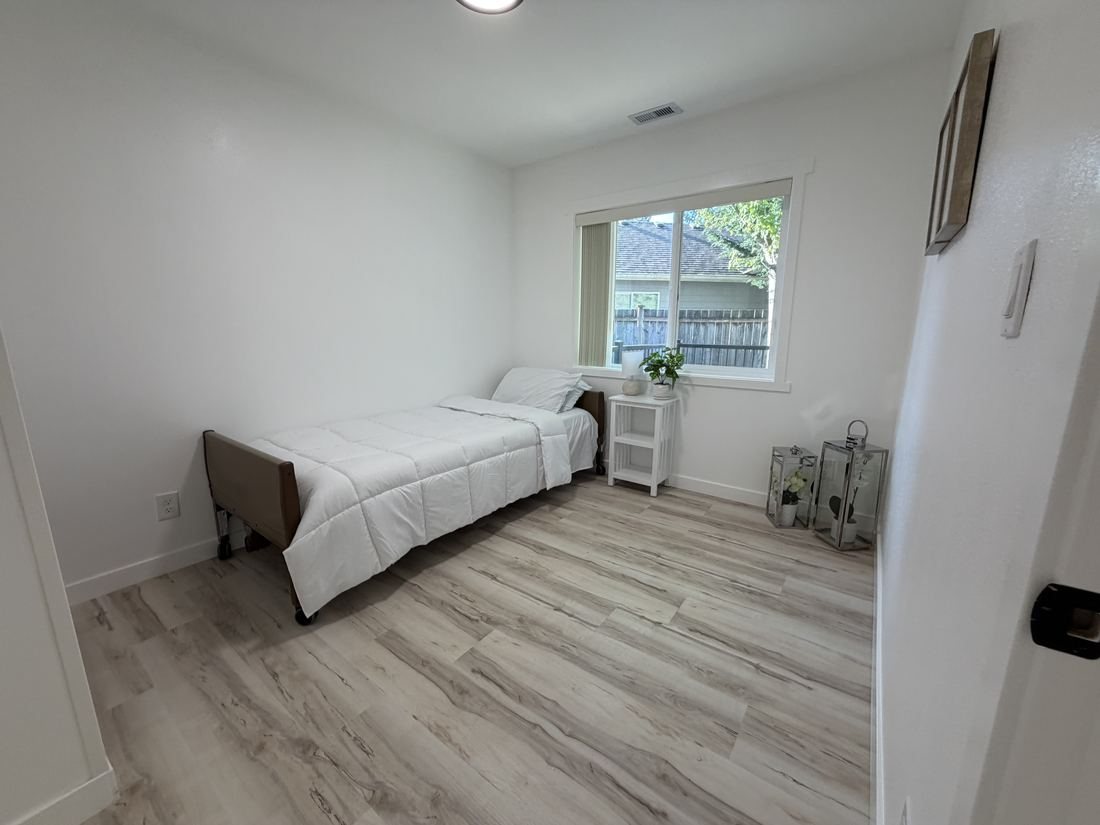
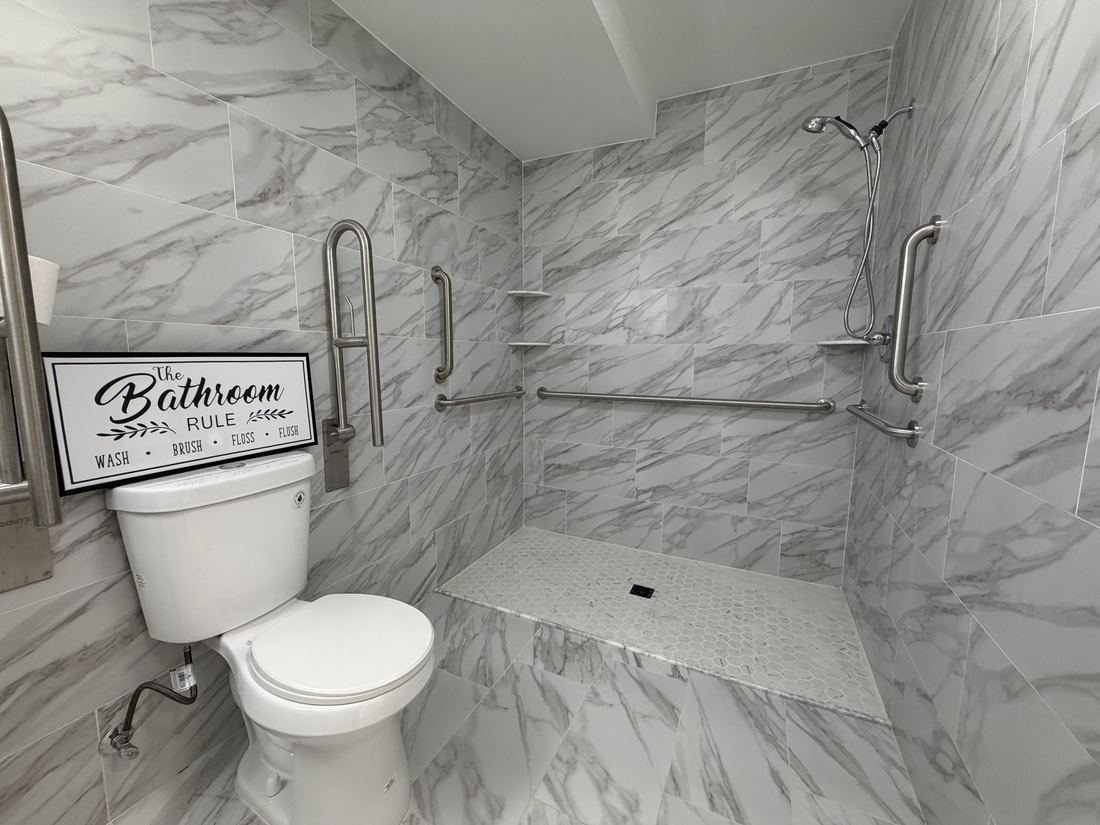
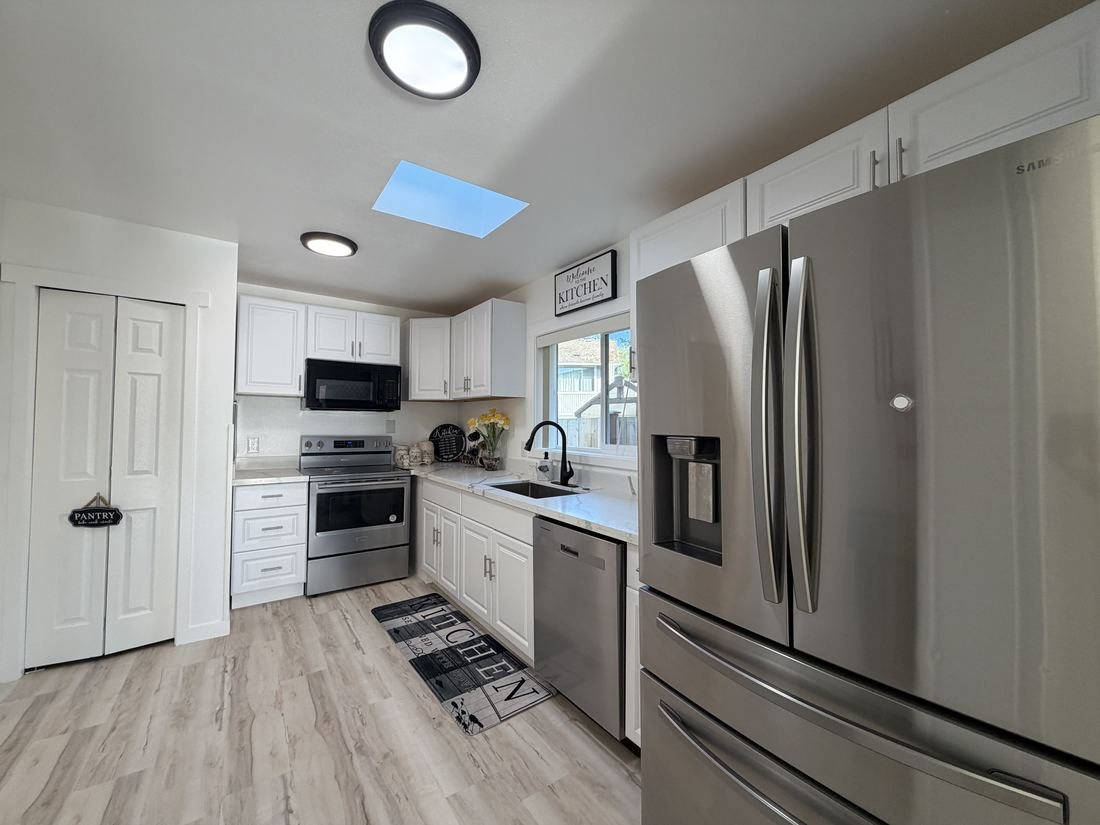
Many residents arrive after a fall, and their families want to know it will not happen again. That is why I look for a flat house first.
The city's sign-off. State law says an adult family home is a residential use, allowed in every residential or commercial zone, single-family included. For a conversion, the local building official must mark the state's building checklist PASSED before DSHS accepts your application. What that takes depends on the city. If the house has septic or a well, the local health authority must approve it for an adult family home.
One phone call before you offer. Tell the permit office the address and that you plan a licensed adult family home there. Ask what they will require and what it costs. A house that cannot pass, or needs five figures of work to pass, is the worst result. The call is free.
Four more things to check on the tour. Every bedroom needs a window that works as an escape, and a high sill cannot be fixed with a step or a platform. Ask how many people the septic system is approved for. Ask whether the house is on public water and sewer, because DSHS asks for papers on both. If the house is in an HOA or has covenants, ask your attorney to read them before you offer. Zoning law and private rules are two different things. Write all four on the sheet.
Tour with a tape measure and the sheet at the back of this guide. Fill in the numbers while you stand in the house. By the third house they blur together.
When this step is done you hold
- The building checklist marked PASSEDFor a conversion. Signed and dated by the local building official, with a floor plan
- Septic or well paperworkFrom the local health authority, if the house has either
The rules, with sources
Where to check this
- WAC 388-76-10690, bedroom floor space, Washington State Legislature
- WAC 388-76-10780, toilets and bathing, Washington State Legislature
- WAC 388-76-10715, doors, Washington State Legislature
- Building inspections for adult family homes, DSHS
- RCW 70.128.140, zoning, Washington State Legislature
- WAC 388-76-10700, local building approval, Washington State Legislature
- WAC 51-51-0330, adult family home building code, Washington State Legislature
One toilet for every five people, and your own household counts.

Part four
Winning it
The sale, the seller's paperwork, the offer, and the clocks.
A seller running a home cannot afford a deal that falls apart in month two, with residents and staff already told. That is why a clean offer with a believable plan wins.
Mill Creek. SounderBruce, CC BY-SA 4.0
Part four
Winning it
The sale, the seller's paperwork, the offer, and the clocks.
A seller running a home cannot afford a deal that falls apart in month two, with residents and staff already told. That is why a clean offer with a believable plan wins.
Step 10
Buying an operating home
Here you, the seller and your attorney lead, and then DSHS. I handle the house, and I can help with the business too. When a licensed home sells as a business, two things change hands. Each has its own agreement, and both aim at one closing.
The business is a separate agreement. It covers the name, phone number, website, furniture and goodwill. Your attorney writes or reviews it. I can help with the business side: finding the home, weighing the price and terms with you, negotiating, and keeping both agreements on the same dates.
What does not come with it. The license. You qualify on your own and apply for your own. The Medicaid contract ends with the seller's license, and you sign your own.
The seller's 60 days. The seller must give written notice 60 days before the change, to DSHS and to every resident or their representative. DSHS says a defective notice is its most common reason for sending these applications back. So ask for it early.
Residents are part of what you buy. If two residents move out during the notice, you are buying something different from what you agreed. Ask your attorney to tie the price to how many residents live there at closing, or to give you a way out.
Check the home's record yourself. DSHS's locator shows three years of inspections and enforcement actions for every licensed home. A plan of correction is routine. Fines, license conditions and a stop placement are not. A stop placement means the home cannot admit residents.
Who asks for what. I ask the seller for the house papers: the building approval and floor plan, septic and well approvals, and the license history. I can also help you ask for the business papers, such as the residents list, payroll, rates and the tax status letter, and your attorney reviews them.
The seller stays the licensee until your license is issued. Everything in the home is still their responsibility. A sale is not a reason to move any resident.
The rules, with sources
The seller's notice is in WAC 388-76-10105 and 10106. The seller's relinquishment letter is DSHS form 10-412, signed by every member if the seller is an LLC.
Where to check this
- WAC 388-76-10105, change of ownership, Washington State Legislature
- WAC 388-76-10106, notice of change of ownership, Washington State Legislature
- DSHS 10-412, the relinquishment letter, DSHS
- Adult family home locator, DSHS
- WAC 388-76-10980, stop placement, Washington State Legislature
Step 11
Making the offer
I write the offer, with your attorney and your lender beside me. A strong offer is price and terms together. Price is what you pay. Terms are everything else: how sure your financing is, the closing date, the earnest money, and which protections you keep.
On an adult family home, terms count for more. A seller running a home cannot afford a deal that falls apart in month two. A clean, well-financed offer with a believable license plan is worth more than a higher number from someone who has not started their hours.
Washington contracts favor buyers by default. You usually have protections, called contingencies, that let you leave the deal. In a competitive sale some buyers give one up to look stronger. That helps the seller and closes your way out. If you then do not close on time, you can lose your earnest money. Here are the protections I look at.
A license contingency. On an operating home, the deal should depend on DSHS granting you a license by a set date. It should say what happens if the license is late. Set the closing after the license and after the seller's 60-day notice, not before.
Inspection. Keep it. Add a sewer scope or a septic inspection, and a measured floor plan. On a conversion, the building official's walkthrough only works for a house that needs no changes. If work is needed, it comes after you own the house, and DSHS will not accept your application until the checklist is passed.
Financing. Keep it. Be fully underwritten before you write the offer, by a lender who has closed an adult family home before.
Appraisal. If the house appraises below your price, the gap can fall on you. Ask your lender about it early, and ask me what similar homes have sold for.
Both agreements together. Ask your attorney to link the house agreement and the business agreement, so that if one fails, both fail and your earnest money comes back.
Wire fraud. I will never email you wire instructions. If an email that looks like it comes from me or from escrow asks you to wire money, call escrow on a number you already have and confirm by voice before you send anything.
Step 12
From accepted offer to first resident
This stretch belongs to you and DSHS, and your consultant or attorney can help with the application. On an ordinary house, the keys are about 30 days away. On this purchase, the keys and the license are two different days. The gap between them is where the plan holds or breaks.
You apply to DSHS online, at baau.dshs.wa.gov, with a Secure Access Washington login. Paper stopped in 2023. A new license costs $2,750. A change of ownership costs $700. A card payment adds 2.9%.
Expect it to come back once. DSHS says 98 percent of applications are returned as incomplete. The usual reasons are a defective seller's notice, a letter not signed by every owner, business names that do not match, and an experience form with missing dates.
Two clocks run against you. You have 60 days to answer DSHS's first request. And the application voids if there is no license within a year of first submitting. The year starts the day you submit, so do not file early.
The DSHS inspection comes before anyone moves in. After DSHS accepts your application, a licensor emails you to set a date. The house, the systems and the papers must all be ready first. On the day, the licensor checks your training and background checks, your water and sewer papers, your logs and a sample resident file, and walks the home with you. You leave with a written list of anything that is not met.
If something is not met, you fix it and ask in writing for a follow-up visit. DSHS may take missing papers by email, or check some fixes by video. If you still do not meet the rules after a second follow-up, DSHS can send the file to a department review for a decision. The one-year clock keeps running. If you need more time, ask DSHS for it in writing before the year ends.
The home's own paperwork. DSHS reads your policies as well as your papers. Before any resident is admitted, the home must give them the written notice of rights and services, with the charges, and keep a signed copy. If you will take extra payments from Medicaid residents, you also need the written policy from step 4. The sample resident file needs a place for each item DSHS lists, such as the assessment, the care plan and an inventory of belongings. Your consultant or attorney writes these, and I can help you find a good one. Do not copy another home's. Ask who will write them before you offer.
Insurance first. Two policies must be in force before your first resident, or within ten working days of the license, whichever comes first: general or business liability, and professional liability. Each must be at least $500,000 for each occurrence and $1,000,000 in all, with the State of Washington and DSHS named as additional insureds.
The TB test comes after the license. The home must have a system so that every provider and staff member is tested within three days of starting work. DSHS's page for new providers lists the TB test as due within three days of the home being licensed.
The first resident. Nobody moves in before the license. Post the license in a common area. You then appear on the state's list.
After you are licensed, DSHS inspects at least every 18 months, and about every 15 on average. A home with no citations in its last three inspections, and no written violations from complaints, can go up to two years. DSHS may also visit without notice at any time.
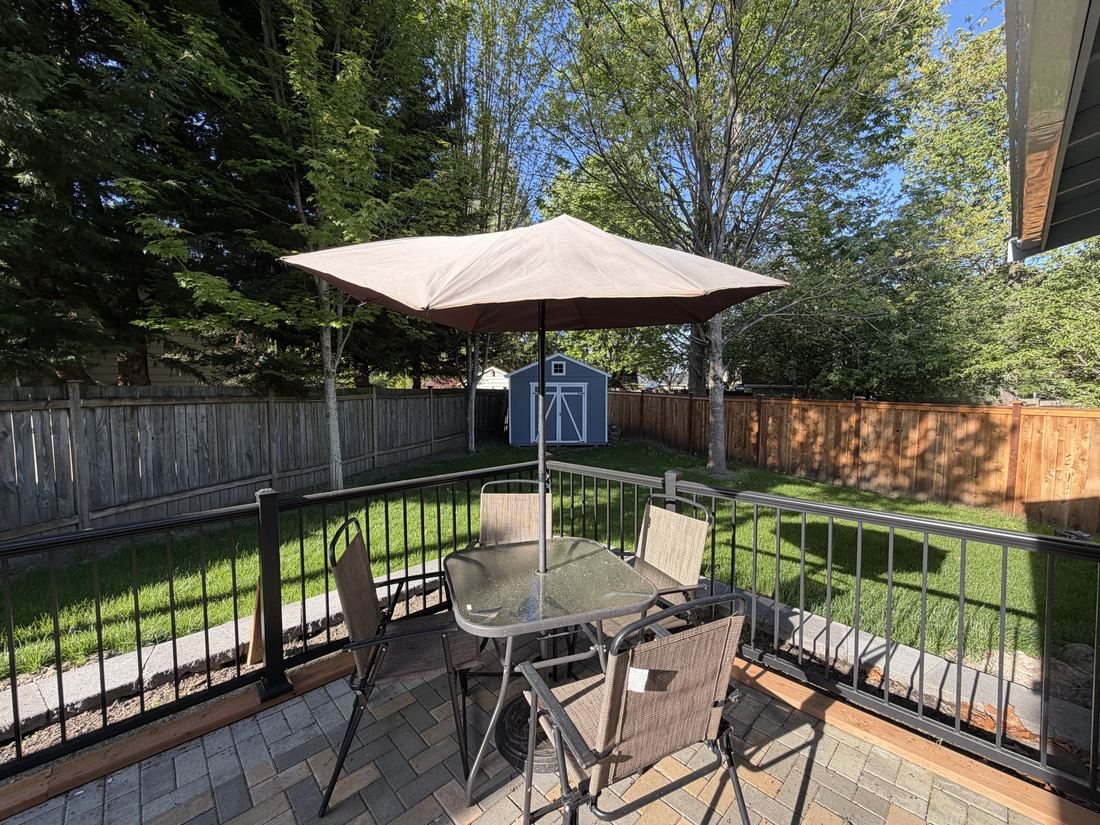
Be easy to find. A family searching after a hospital discharge needs a website, a map listing and a phone number that answers. My family's home sat with empty beds until it existed online. The week it did, a daughter found it, toured and moved her father in.
Buy for year three. A standard license is six beds. After 24 months licensed, with 12 of them at six residents and two clean full inspections, you can apply for seven or eight. Whether the house can get there was decided the day you bought it.
When this step is done you hold
- Your application, submitted and paidKeep your own copy of everything. DSHS cannot return documents
- The DSHS inspection, passedOr a written list to fix, then a written request for a follow-up visit
- Your license, emailed by DSHSNobody moves in before it
- Both insurance policies in forceState of Washington and DSHS named as additional insureds
The rules, with sources
Where to check this
- Online license application, DSHS
- Application processing timeline, DSHS
- WAC 388-76-10075, when an application is void, Washington State Legislature
- WAC 388-76-10191, liability insurance, Washington State Legislature
- RCW 70.128.066, seven and eight bed homes, Washington State Legislature
- RCW 70.128.070, inspections, Washington State Legislature
- RCW 70.128.070, inspections, Washington State Legislature
- WAC 388-76-10265, tuberculosis testing, Washington State Legislature
- WAC 388-76-10530, notice of rights and services, Washington State Legislature
- DSHS inspection procedures, Residential Care Services manual chapter 11, DSHS
Part five
Working together
Why work with me, the agreement in plain English, and what happens next.
My parents' home had empty beds until it existed online. The week it did, a daughter found it, toured it and moved her father in.
My parents' home
Part five
Working together
Why work with me, the agreement in plain English, and what happens next.
My parents' home had empty beds until it existed online. The week it did, a daughter found it, toured it and moved her father in.
Step 13
Why work with me
You can buy an adult family home with any agent. This is what you get when you work with me.
There is no rush. Buy now, or in a year. Start with me now, so your hours, your training and your lender are ready when the right house comes up.
Step 14
The agreement, in plain English
Here is what working with me looks like on paper. I go through it with you line by line, and it has five parts.
How I am paid. My fee is 2.5% of the purchase price of the house, and the seller usually pays it.
Your attorney can read the agreement before you sign, and you read every line yourself. If you ever want out, you can cancel any day, for any reason.
Step 15
What happens next
Here is what happens after you sign, in order.
When you are ready, tell me, and I will send you the agreement. If you are not sure yet, send me an address, and I will tell you what it would take.
Walkthrough measurements
Fill in a column at each house, before you get back in the car. Usable floor is measured without the closet.
| Home A | Home B | Home C | |
|---|---|---|---|
| The house | |||
| Address | |||
| Asking price | |||
| Stories, and which floor the bedrooms are on | |||
| Bedrooms (usable sq ft, escape window and sill height) | |||
| Bedroom 1 | |||
| Bedroom 2 | |||
| Bedroom 3 | |||
| Bedroom 4 | |||
| Bedroom 5 | |||
| Bedroom 6 | |||
| Bathrooms | |||
| Toilets reachable from the hallway | |||
| People in the home, residents plus household | |||
| Toilets needed (people divided by five, rounded up) | |||
| Getting around | |||
| Narrowest door on the resident route (inches) | |||
| Narrowest hallway (inches) | |||
| Steps to the street from the front door | |||
| Bedrooms with a stair-free path to the street | |||
| Systems | |||
| Water and sewer: public, or well and septic (septic approved for how many people) | |||
| Sprinklers, or attic access and water service | |||
| Hot water at the tap (degrees) | |||
| Outside | |||
| Parking for staff and families | |||
| HOA or private covenants (yes or no) | |||
| Drive time to the nearest hospital | |||
| Deciding | |||
| What it would cost to meet the state's rules (step 9) | |||
| Write an offer? | |||
What to have before you make an offer
Check off what you have. The blanks are where these deals fall apart.
- Your 1,000 hours, written downOn the notarized DSHS form, inside the last 60 months
- Your training started or doneThe administrator class, the 75 hours and the Home Care Aide exam
- Your attorneyChosen before the offer, not after
- A lender who has closed an adult family homeFully underwritten, not just pre-qualified
- The permit office's answer for this addressOne phone call. Write down who you spoke to
- The house measuredBedrooms, toilets, doors, windows and the way out
- Three years of the home's DSHS reportsFrom the state's locator, not from the seller
- Cash to closeEarnest money, inspections, the application fee, closing costs and the empty months
Your move
Would you like to move forward?
If yes, I need two things: the best email to send the agreement to, and a time you can read and sign it.
If you are not sure yet, send me an address. Any address, even one you found ten minutes ago. I will tell you whether it could hold six residents, where the cost would be, and whether I would write an offer on it. It takes me about twenty minutes, and it costs you nothing.
Do not wait until you have found the house. Your hours, your training and a lender who has done one of these all take longer than finding a listing does.
Three ways to start, easiest first
 Scan to book
And if you are still deciding whether to work with me
This guide told you which numbers have a published source, which houses I would walk away from, and when the right answer is to wait a year. That is what working with me sounds like too. My agreement runs a year, covers any property from any source, and you can cancel it any day you like for any reason at all. My fee is 2.5%, and the seller usually pays it.
Henos Adhana · (206) 203-4944 · [email protected]

Send me an address.
I will tell you what it would take, including when the answer is to keep looking.
Henos Adhana · (206) 203-4944
[email protected] · henosadhana.com
eXp Realty, 1455 Leary Way NW, Suite 400, Seattle 98107
I am a licensed Washington real estate broker, not a licensing consultant, a lender, an attorney, an accountant or a home inspector. Nothing here is legal, tax, lending or licensing advice. Adult family home licenses are granted by DSHS under RCW 70.128 and WAC 388-76, fees are set in the state budget, and all of it changes. Confirm anything you plan to rely on with DSHS, your local building official and your own advisers before acting on it.
Lynnwood. Atomic Taco, CC BY-SA 2.0
I am a licensed Washington real estate broker, not a licensing consultant, a lender, an attorney, an accountant or a home inspector. Nothing here is legal, tax, lending or licensing advice. Adult family home licenses are granted by DSHS under RCW 70.128 and WAC 388-76, fees are set in the state budget, and all of it changes. Confirm anything you plan to rely on with DSHS, your local building official and your own advisers before acting on it.