
University District market snapshot
Over the trailing twelve months, the median University District home sold for about $1,112,500, up 0.1% from a year earlier. Homes here typically went under contract in about 7 days at roughly 100.0% of list price (around $561/sq ft), reflecting a brisk, seller-leaning market. These rolling 12-month figures come from the Northwest Multiple Listing Service, the regional MLS Seattle-area agents list on, as of June 2026, and cover the broader market area around University District rather than University District on its own, so for any specific home it is worth comparing recent sales on that block.
About University District
The University District (commonly called the U District) sits in central-northeastern Seattle, north of Portage Bay and the Lake Washington Ship Canal and generally east of Interstate 5, with the main campus of the University of Washington anchoring its east side. Its informal boundaries run from I-5 on the west to University Village and Union Bay on the east, and from the Ship Canal on the south to NE Ravenna Boulevard on the north.
The area was surveyed by the territorial government in 1855 and opened to settlement in 1867. Real estate developers platted the Brooklyn neighborhood on the west side in the 1890s, and the University of Washington relocated to the district in 1895; the name "University District" was adopted after a public contest in 1919.
Want to know what your money actually buys in University District right now?
Talk it through before you writeHousing & homes
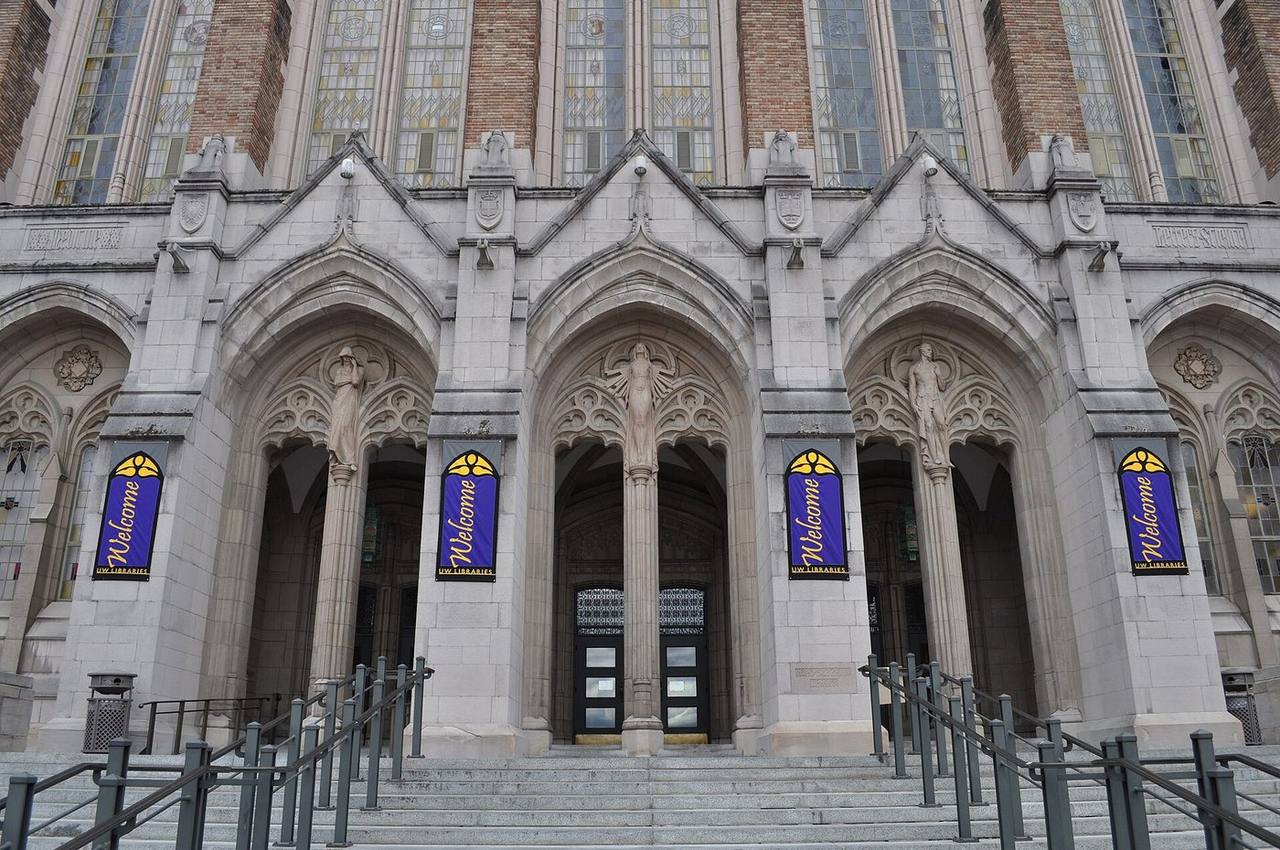
The U District's housing reflects layered eras of construction. Early-20th-century growth left the neighborhood with older single-family homes and 1920s residential and commercial buildings, and Greek Row along 17th Avenue NE developed fraternity and sorority houses by the late 1930s. The University of Washington adopted Collegiate Gothic architecture on campus in the 1920s, and Art Deco detailing survives in landmarks such as the Neptune Theatre (1921) and the former hotel now operating as the Graduate Seattle.
Alongside these older buildings, the U District has seen substantial recent construction. Following a 2017 rezone, mid-rise and high-rise residential towers, many oriented toward student housing, have been added in the core. As a result, buyers here encounter a wide mix of property types: vintage single-family houses, older multifamily and rental buildings, condominiums, and new apartment and mixed-use towers.
Local conditions to know
The U District's southern edge fronts Portage Bay and the Lake Washington Ship Canal, and the University Bridge (opened 1919) carries traffic over the canal. Shoreline and fill soils along Seattle's waterways can be more susceptible to earthquake shaking and liquefaction than upland areas; the nearby University Village area to the east has been noted for looser fill soils, so a geotechnical review is worth considering for properties near the water or on filled ground. Verify any specific property's flood and geologic-hazard status through FEMA's Flood Map Service Center and the City of Seattle's hazard mapping.
Transit access is a defining feature. U District Station on Sound Transit's Link light rail opened October 2, 2021, with underground entrances on Brooklyn Avenue NE near NE 43rd and NE 45th streets, connecting the neighborhood south to Capitol Hill and downtown and north to Roosevelt and Northgate; the University of Washington Station opened in 2016. Interstate 5 forms the western boundary and is a primary arterial route.
Getting around & local texture
The neighborhood's best-known commercial corridor is University Way NE, known locally as "The Ave," lined with independent shops, restaurants, and long-running businesses including the University Book Store. The University District Farmers Market, founded in 1993, runs every Saturday year-round on The Ave between NE 50th and NE 52nd streets. The historic Neptune Theatre (1921) operates as a performing arts venue, and University Village, a large open-air shopping center that opened in the 1950s, sits just east of the district. Nearby open space and waterfront include the Union Bay Natural Area and the Ship Canal shoreline.
The University District is served by Seattle Public Schools, the district that covers the city of Seattle. Because attendance-area boundaries are drawn by street and can change, confirm the specific assigned elementary, middle, and high school for any given address using the Seattle Public Schools "Find Your School" address-lookup tool.
What buyers & sellers weigh in University District
- The neighborhood mixes vintage single-family homes with condos and new towers; be clear on which property type and ownership structure you are pursuing.
- Properties near Portage Bay or the Ship Canal may sit on fill soils; budget time for a geotechnical or inspection review.
- Confirm each address's FEMA flood zone and Seattle geologic-hazard status before making an offer.
- The 2017 rezone allows taller buildings in parts of the core, so check current zoning and any nearby development that could affect views or light.
- Proximity to U District Station on Link light rail is a concrete, verifiable amenity worth highlighting when selling.
- Confirm the assigned schools for a specific address through the Seattle Public Schools lookup tool, since boundaries are street-specific.
What makes University District distinct
- One of only a handful of Seattle neighborhoods anchored by a major university campus, shaping its rental and student-housing market.
- A 2017 upzone raised allowable building heights in the core, adding new residential towers alongside older housing.
- Direct underground Link light rail access at U District Station (opened 2021) links the neighborhood to Capitol Hill, downtown, and Northgate.
- The Ave (University Way NE) and the year-round University District Farmers Market give the area a dense, walkable commercial core.
- Waterfront on Portage Bay and the Lake Washington Ship Canal, crossed by the century-old University Bridge.
Services in University District
University District real estate FAQ
Where is the University District, and what are its boundaries?
The U District is in central-northeastern Seattle, north of Portage Bay and the Lake Washington Ship Canal and generally east of Interstate 5. It is informally bounded by I-5 on the west, University Village and Union Bay on the east, the Ship Canal on the south, and NE Ravenna Boulevard on the north, with the University of Washington campus on its east side.
What kinds of homes are available in the University District?
The neighborhood has a mix of property types: older single-family houses and 1920s buildings, older multifamily and rental buildings, condominiums, and newer mid-rise and high-rise residential towers built after the 2017 rezone. The right search depends on which property type and ownership structure fit your goals.
How is transit access in the University District?
U District Station on Sound Transit's Link light rail opened on October 2, 2021, with entrances on Brooklyn Avenue NE near NE 43rd and NE 45th streets, connecting the neighborhood to Capitol Hill and downtown to the south and Roosevelt and Northgate to the north. The University of Washington Station opened in 2016, and Interstate 5 runs along the western edge.
Which school district serves the University District?
The University District is within Seattle Public Schools. Attendance-area boundaries are set by street and can change, so confirm the specific assigned schools for any address using the Seattle Public Schools "Find Your School" address-lookup tool.
Sources & data
- University District, Seattle - Wikipedia
- U District station - Wikipedia
- U District Station - Sound Transit
- Link light rail reaches Seattle's University District, Roosevelt and Northgate - Sound Transit
- U District Urban Design (2017 rezone) - City of Seattle OPCD
- University District Farmers Market - Neighborhood Farmers Markets
- Map of the Week: Natural Hazards in Seattle - The Urbanist
- FEMA Flood Map Service Center
- Find Your School - Seattle Public Schools