
Belltown market snapshot
Over the trailing twelve months, the median Belltown home sold for about $611,000, down 6.0% from a year earlier. Homes here typically went under contract in about 42 days at roughly 98.0% of list price (around $693/sq ft), reflecting a slower, more buyer-friendly condo market. These rolling 12-month figures come from the Northwest Multiple Listing Service, the regional MLS Seattle-area agents list on, as of June 2026, and cover the broader market area around Belltown rather than Belltown on its own, so for any specific home it is worth comparing recent sales on that block.
About Belltown
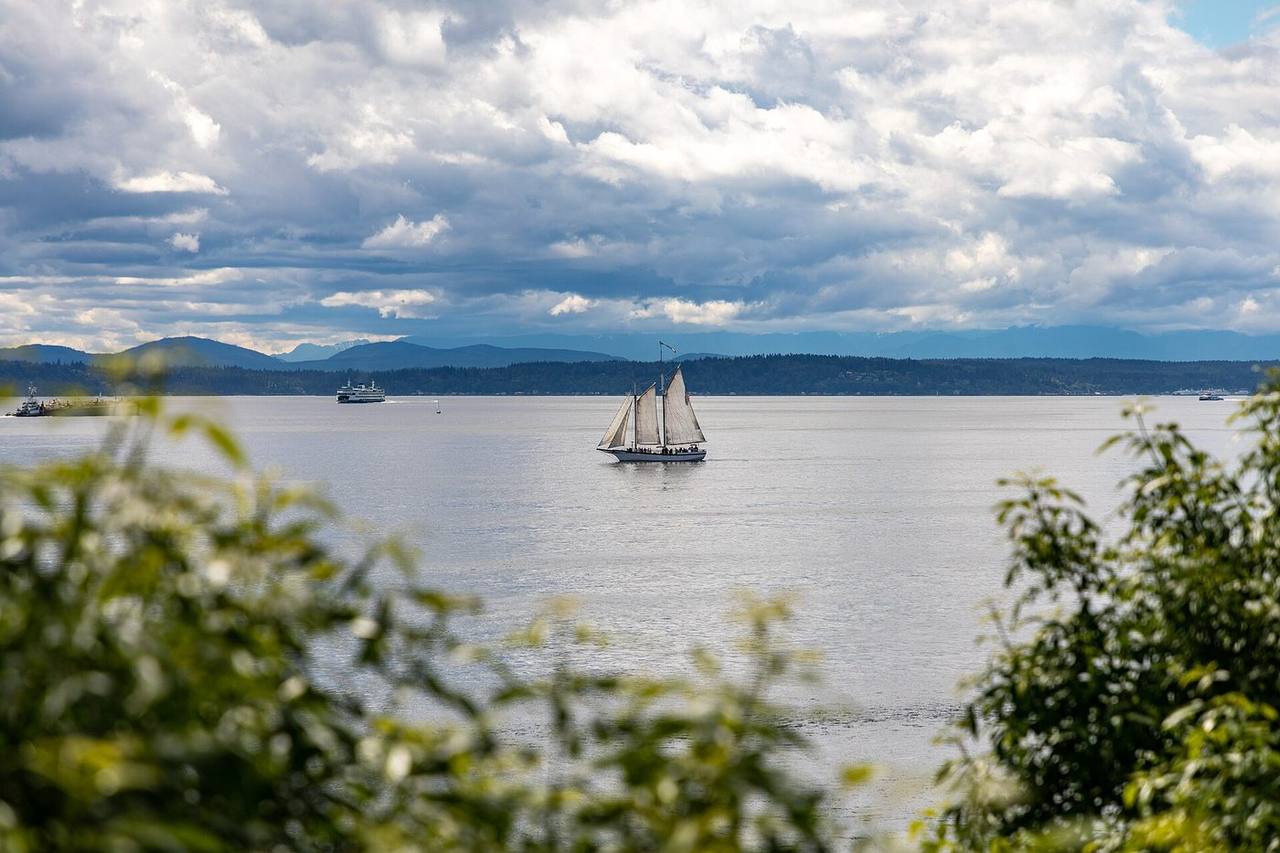
Belltown sits on Seattle's downtown waterfront, bounded by Denny Way to the north, Elliott Bay to the southwest, Virginia Street to the southeast, and 5th Avenue to the northeast. It falls within the 98121 ZIP code and is, by the count Wikipedia reports, the most densely populated neighborhood in the city.
The area is named for William Nathaniel Bell, an early settler whose land claim formed the neighborhood's foundation. Much of Belltown sits on ground that was artificially flattened during the Denny Regrade, a series of early-20th-century projects that sluiced away Denny Hill and reshaped the district for denser development. Once a semi-industrial arts district, Belltown today is a mix of residential towers, restaurants, galleries, and small businesses. If you are buying or selling here, working with an agent who understands the condominium market matters; I'm Henos Adhana with eXp Realty (HARE), and I work across Seattle, the Eastside, and the north-end suburbs.
Want to know what your money actually buys in Belltown right now?
Book a 30-minute buying callHousing & homes
Belltown is a condominium-dominated market, so the housing stock you will encounter is overwhelmingly attached, multi-story residences rather than detached houses.
The building stock spans several eras. Seattle's first high-rise condominium, the Royal Crest, opened in 1972, and the City upzoned the neighborhood as a high-rise residential district in the 1970s. A change to city codes allowing up to five stories of wood-frame construction on a concrete base made mid-rise buildings more feasible and drew new development beginning in the 1980s. High-rise condominium construction accelerated through the 1990s and 2000s, and towers have continued to be added in recent years, including First Light, completed in 2024. Alongside the towers, older warehouse and commercial buildings from the neighborhood's industrial and Film Row periods remain part of the streetscape.
Local conditions to know
Belltown's proximity to Elliott Bay and its regraded, filled ground are the local conditions most relevant to buyers and sellers. Fill and alluvial soils near the waterfront are associated with elevated liquefaction hazard in a Seattle Fault Zone earthquake, and Seattle's early regrades placed fill along the Elliott Bay shoreline; you can check a specific parcel against the Washington Geological Survey's geologic hazard maps and the city's environmentally critical areas mapping before you buy.
Transit is a defining feature. Bus stops on 3rd Avenue serve RapidRide and local routes, and the Downtown Seattle Transit Tunnel's Westlake light-rail station, served by Sound Transit's 1 Line and 2 Line, sits just southeast of the neighborhood. On the waterfront edge, the Alaskan Way Viaduct was demolished in 2019 after the SR 99 tunnel opened, and the city has since rebuilt Alaskan Way and added a new street connection between the waterfront and Belltown between Blanchard and Bell streets.
Getting around & local texture
Belltown's retail and dining cluster along 1st and 2nd Avenues, where independent boutiques, galleries, restaurants, and bars have concentrated since the neighborhood's 1990s revitalization. The monthly Belltown Art Walk supports self-guided tours of galleries and studios, a nod to the district's history as Seattle's early arts scene and its Film Row past on 2nd and 3rd Avenues.
Green space includes the Olympic Sculpture Park, a free 9-acre outdoor sculpture park operated by the Seattle Art Museum at the northern end of the central waterfront; Bell Street Park, a four-block park-like corridor running through the neighborhood; and Regrade Park, a small off-leash dog area at 3rd and Bell. For families, Belltown is assigned to Lowell Elementary in Seattle Public Schools, whose attendance area the district describes as including students in downtown Seattle, including South Lake Union, Belltown, and the Denny Triangle; confirm any specific address with the district's Find Your School tool, since boundaries can change.
What buyers & sellers weigh in Belltown
- Belltown is a condominium market; expect attached, multi-story residences rather than detached single-family homes.
- Review HOA documents, reserves, budgets, and any special assessments carefully, since these drive the total cost of condo ownership.
- Ask about building construction type and any history of envelope, water-intrusion, or resale-restriction issues in older mid- and high-rise condos.
- Check parking: deeded stalls, assigned spaces, and monthly fees vary widely by building in a dense neighborhood.
- Have a specific parcel checked against Washington Geological Survey hazard maps and the city's environmentally critical areas mapping given the regraded, near-waterfront ground.
- Confirm school assignment for a specific address with Seattle Public Schools, as attendance boundaries can change.
What makes Belltown distinct
- Belltown is among Seattle's densest neighborhoods and, unlike most nearby areas HARE covers, is a condominium rather than single-family market.
- It sits directly on the downtown waterfront, adjacent to the Olympic Sculpture Park and the rebuilt Alaskan Way corridor.
- Its ground was artificially flattened in the Denny Regrade, giving it a distinct topography and fill history compared with hillier surrounding neighborhoods.
- It offers unusually direct access to downtown transit, including 3rd Avenue RapidRide service and the nearby Westlake light-rail station.
- It carries a layered identity as a former arts and Film Row district that is now a high-rise residential and dining area.
Services in Belltown
Belltown real estate FAQ
Is Belltown mostly condos or single-family homes?
It is overwhelmingly condominiums: detached single-family sales are essentially absent, so buyers and sellers here are almost always working with attached, multi-story residences.
What are Belltown's boundaries?
Belltown is bounded by Denny Way to the north, Elliott Bay to the southwest, Virginia Street to the southeast, and 5th Avenue to the northeast. It falls within the 98121 ZIP code.
Which school district serves Belltown?
Belltown is part of Seattle Public Schools and is assigned to Lowell Elementary, whose attendance area the district describes as including downtown Seattle neighborhoods such as Belltown, South Lake Union, and the Denny Triangle. Confirm any specific address using the district's Find Your School tool, since boundaries can change.
How is transit access in Belltown?
It is a transit-rich neighborhood. Bus stops on 3rd Avenue serve RapidRide and local routes, and Sound Transit's Westlake light-rail station, served by the 1 Line and 2 Line, is just southeast of the neighborhood in the Downtown Seattle Transit Tunnel.
Sources & data
- Belltown, Seattle - Wikipedia (boundaries, density, history, namesake, Olympic Sculpture Park)
- HistoryLink.org - Seattle Neighborhoods: Belltown-Denny Regrade (regrade history, condo/upzone timeline)
- Seattle OPCD - Belltown Small Lot Development (zoning, urban village context)
- Lowell Elementary School (Seattle Public Schools) - attendance area including Belltown
- Seattle Public Schools - Find Your School (address-based assignment)
- Sound Transit - Westlake station (Wikipedia)
- City of Seattle - RapidRide J Line / 3rd Avenue transit service
- WSDOT - Alaskan Way Viaduct Replacement Program (SR 99 tunnel, viaduct demolition)
- City of Seattle - Alaskan Way & Elliott Way (waterfront-to-Belltown connection)
- Washington DNR - Geologic Hazard Maps (liquefaction / seismic hazard)
- Seattle Parks - Olympic Sculpture Park / Bell Street Park / Regrade Park